

Table of Contents
You’ve probably already heard that staying active and eating well can help keep your joints healthy, but joint health involves more than simply exercising or taking a supplement. In this guide, you’ll learn how to improve joint health naturally through movement, strength training, mobility, nutrition, healthy weight management, recovery, and injury prevention.
Key Takeaways
- Joint health refers to maintaining the structures and functions that allow joints to move comfortably, safely, and effectively.
- Regular physical activity supports mobility and the muscles and tissues surrounding the joints.
- Strength training helps strengthen muscles that stabilize and move the joints.
- Healthy body weight can reduce mechanical stress on weight-bearing joints when excess weight is present.
- Balanced nutrition provides protein, vitamins, minerals, and other nutrients needed for musculoskeletal health.
- Recovery habits such as adequate sleep and gradual exercise progression support sustainable activity.
- Persistent or severe joint symptoms should be evaluated by a healthcare professional rather than managed only with lifestyle advice.
What Is Joint Health and Why Does It Matter?
Joint health is the ability of the joints and surrounding tissues to support comfortable, stable, and functional movement. Healthy joints help you walk, climb stairs, bend, lift objects, exercise, and perform everyday activities.
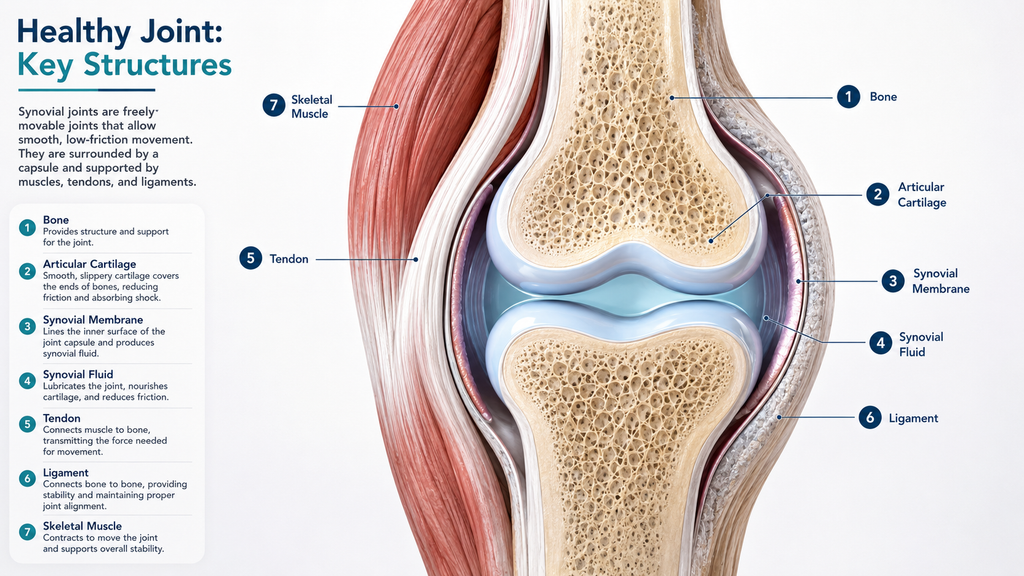
Moreover, a joint is more than the point where two bones meet. Cartilage, bones, muscles, tendons, ligaments, and surrounding tissues work together to provide movement and stability. For example, cartilage helps provide a smooth surface between bones while muscles help control and stabilize movement.
At the same time, joint health can change with age, previous injuries, activity levels, body weight, and certain medical conditions. Osteoarthritis affected about 528 million people worldwide in 2019 — Source: [World Health Organization, 2023].
In addition, osteoarthritis is not an unavoidable part of getting older. The World Health Organization notes that physical activity and healthy eating that support strong muscles and a healthy weight can help reduce symptoms in people with osteoarthritis.
For related musculoskeletal health, see our guide on supplements for bone health
Why Is Joint Health Important?
Joint health matters because comfortable movement, muscle strength, balance, and mobility contribute to independence and quality of life. Maintaining joint function can make everyday physical activity easier and more sustainable.
Furthermore, strong muscles can help support the joints during movement. For example, stronger leg muscles can make activities such as standing from a chair, climbing stairs, and walking easier.
Joint health also matters because inactivity can make it harder to maintain physical function. Adults are generally advised to get at least 150 minutes of moderate-intensity aerobic activity each week plus muscle-strengthening activity on at least 2 days — Source: [CDC, 2025].
Importantly, you do not have to reach that target immediately. The CDC emphasizes that some physical activity is better than none, and activity can be divided into smaller periods throughout the week.
For readers who want additional joint-support options, Joint Genesis can be considered alongside regular movement, strength training, balanced nutrition, and recovery. Individual results can vary, so review the product information and consult a healthcare professional if you have a medical condition or take medication.
How Can You Improve Joint Health Naturally?
Improving joint health involves regular physical activity, muscle strengthening, mobility work, balanced nutrition, healthy weight management when appropriate, and adequate recovery. The goal is to build sustainable habits rather than search for one quick fix.
Stay Physically Active
First, regular movement is one of the most practical ways to support joint function. Low-impact activities such as walking, cycling, and swimming can provide regular movement while placing less impact on the joints than high-impact activities.
For example, a beginner might start with a 10-minute walk and gradually increase duration as comfort and fitness improve. Short activity periods can still contribute to your weekly total.
Moreover, choose activities you enjoy and can repeat consistently. Walking, swimming, cycling, dancing, gardening, and water exercises are examples of joint-friendly activities identified by the CDC.
For more ideas, see low-impact exercises .
Add Strength Training
Second, strength training supports joint function by strengthening the muscles that help stabilize and move the joints. Strong surrounding muscles can make functional movements more controlled and efficient.
For example, a beginner could use body-weight squats to a chair, resistance bands, wall push-ups, or light weights. Start with manageable resistance and increase difficulty gradually.
The CDC recommends muscle-strengthening activities at least 2 days per week for adults — Source: [CDC, 2025].
For more information about nutrition supporting training, protein for muscle health.
Improve Mobility and Flexibility
Third, mobility exercises help you move joints through comfortable ranges of motion. Mobility focuses on controlled movement, while flexibility generally refers to how much a muscle or joint can move.
For example, gentle ankle circles, shoulder movements, hip mobility drills, and controlled knee bends can be incorporated into a warm-up or daily routine.
In addition, older adults benefit from including balance activities alongside aerobic and muscle-strengthening exercises. Adults aged 65 and older are advised to include balance activities as part of their weekly physical activity. — Source: [CDC, 2025].
Maintain a Healthy Body Weight When Appropriate
Fourth, healthy weight management can support weight-bearing joints when excess body weight is present. Reducing excess load can be particularly relevant for joints such as the knees and hips.
For example, a person with knee osteoarthritis may discuss gradual weight loss and exercise with a healthcare professional. The 2019 American College of Rheumatology/Arthritis Foundation guideline strongly recommends weight loss for people with knee or hip osteoarthritis who are overweight or obese.
The same guideline reports that benefits can occur with weight loss of 5% or more of body weight, with additional benefits associated with greater weight loss — Source: [American College of Rheumatology/Arthritis Foundation, 2019].
For broader guidance, see healthy weight management
Avoid Long Periods of Inactivity
Fifth, prolonged inactivity can make regular movement harder to maintain. Breaking up sedentary periods with comfortable movement can help you stay more active throughout the day.
For example, you could stand and walk for a few minutes after a long period of sitting, take short walking breaks during work, or perform gentle mobility movements.
As such, consistency matters more than occasional intense workouts. A sustainable routine is generally easier to maintain than repeatedly exercising too hard and then stopping because of soreness or discomfort.
What Are the Best Exercises for Joint Health?
The best exercises for joint health are activities that you can perform safely and consistently while matching your current fitness level and physical abilities. Walking, cycling, swimming, resistance exercises, mobility movements, and balance exercises are practical options.
| Exercise | Main purpose | Beginner approach |
|---|---|---|
| Walking | Aerobic fitness and regular movement | Start with 10–20 minutes |
| Cycling | Low-impact aerobic activity | Use comfortable resistance |
| Swimming | Whole-body movement | Begin with short sessions |
| Resistance bands | Muscle strengthening | Use light resistance |
| Chair squats | Leg strength | Use a chair for support |
| Mobility drills | Range of motion | Use slow, controlled movements |
| Balance exercises | Stability | Hold a stable surface nearby |
First, walking is a simple starting point because it requires little equipment. For example, you can begin with a short walk and gradually add several minutes as your tolerance improves.
Second, swimming and water-based exercise can be useful alternatives when land-based activity feels uncomfortable. The CDC lists swimming and water exercises among joint-friendly activities.
Third, resistance exercises should target major muscle groups without causing significant joint pain. The CDC suggests that adults can use weights, resistance bands, or body-weight exercises, commonly performing 8–12 repetitions per activity as a starting framework. — Source: [CDC, 2023].
For more exercise ideas, see best exercises for bone strength
Can Strength Training Improve Joint Health?
Strength training can improve joint support by developing the muscles responsible for stabilizing and moving the body. Stronger muscles can help you perform everyday movements with better control.
For example, strengthening the quadriceps, hips, and glutes can support functional movements such as walking, climbing stairs, and rising from a chair.
Moreover, strength training should progress gradually. Start with a resistance level that allows controlled movement, then increase repetitions, resistance, or exercise difficulty over time.
At the same time, strength training is not a treatment for every joint condition. If an exercise causes significant pain, swelling, instability, or worsening symptoms, stop the exercise and seek appropriate professional guidance.
For broader skeletal health, explore how to strengthen bones naturally
What Foods Are Good for Joint Health?
Foods for joint health are primarily whole, nutrient-dense foods that provide adequate protein, vitamins, minerals, fiber, and healthy fats. No single food can guarantee healthy joints, so focus on the overall dietary pattern.
First, protein supports muscles that help stabilize joints. Examples include eggs, fish, poultry, dairy products, beans, lentils, soy foods, nuts, and seeds.
Second, fruits and vegetables provide a wide range of vitamins, minerals, and plant compounds. Examples include berries, citrus fruits, leafy greens, tomatoes, carrots, peppers, and other colorful produce.
Third, healthy fats can be included through foods such as fatty fish, nuts, seeds, and certain plant oils. A balanced diet should complement—not replace—regular movement and strength training.
For bone and musculoskeletal nutrition, see foods for strong bones and calcium-rich foods
Adequate calcium, vitamin D, and protein are also important for bone health. The National Institute on Aging recommends getting these nutrients through an appropriate diet and discussing vitamin D supplementation with a healthcare professional when vitamin D levels are low. — Source: [National Institute on Aging, 2022].
For additional nutrition information, see [Internal link: vitamin D and bone health and anti-inflammatory foods .
Do Supplements Help Improve Joint Health?
Joint-health supplements may help some people in specific circumstances, but evidence varies considerably by ingredient and condition. Supplements should not replace a balanced diet, exercise, or appropriate medical care.
First, glucosamine and chondroitin are among the most commonly discussed supplements for osteoarthritis. However, research has produced inconsistent findings, and the National Center for Complementary and Integrative Health states that it remains uncertain whether they provide meaningful benefits for osteoarthritis symptoms or joint structure.
Second, supplement safety matters because dietary supplements can interact with medicines. For example, NCCIH notes that glucosamine and chondroitin may increase bleeding risk when used with the anticoagulant warfarin.
Third, collagen and omega-3 products are also marketed for joint support, but evidence depends on the specific product, dose, population, and health condition. Marketing claims should not be treated as proof that a supplement prevents or reverses joint damage.
Therefore, talk with a doctor, pharmacist, or other qualified healthcare professional before starting a supplement, particularly if you take prescription medication or have a diagnosed joint condition.
If you’re considering a joint-health supplement, Joint Genesis is one option you can research as part of an overall joint-support routine. Review the ingredients, serving information, and safety guidance before deciding whether it is appropriate for you.
How Often Should You Exercise for Better Joint Health?
Adults should generally aim for at least 150 minutes of moderate-intensity aerobic activity per week and muscle-strengthening activities on at least 2 days, while adapting the plan to individual abilities and health conditions. — Source: [CDC, 2025].
For example, a beginner could divide 150 minutes into five 30-minute brisk walks across the week and add two short strength sessions.
Moreover, you do not need to begin at the full target. Starting with 5–10 minutes of comfortable movement and gradually increasing duration can make the routine easier to maintain. The CDC notes that even short periods of physical activity can provide benefits.
What Daily Habits Can Support Healthy Joints?
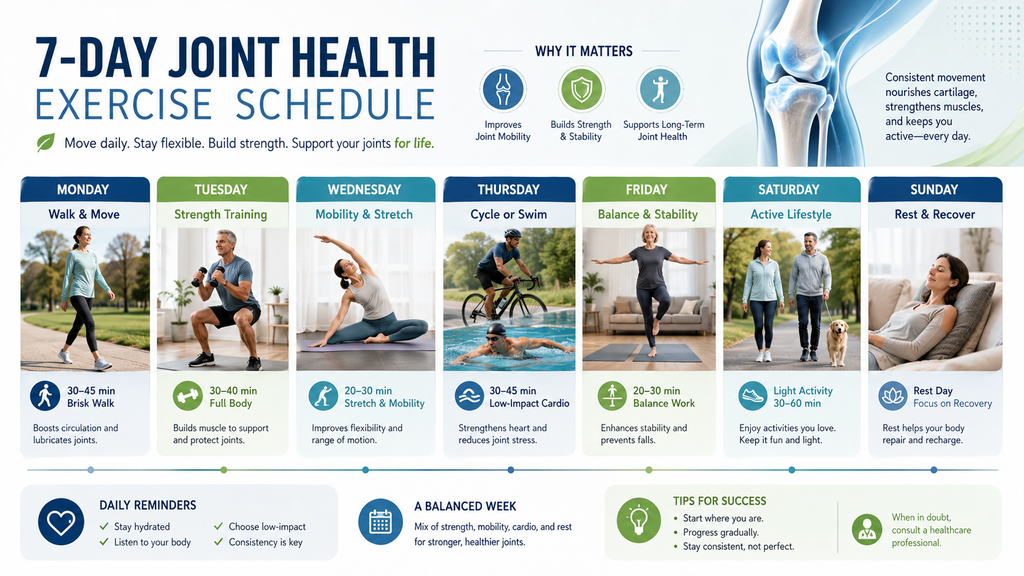
Daily joint-health habits include regular movement, adequate recovery, gradual exercise progression, balanced nutrition, and avoiding unnecessary inactivity. Small habits repeated consistently can create a more sustainable joint-health routine.
For example, use this simple daily checklist:
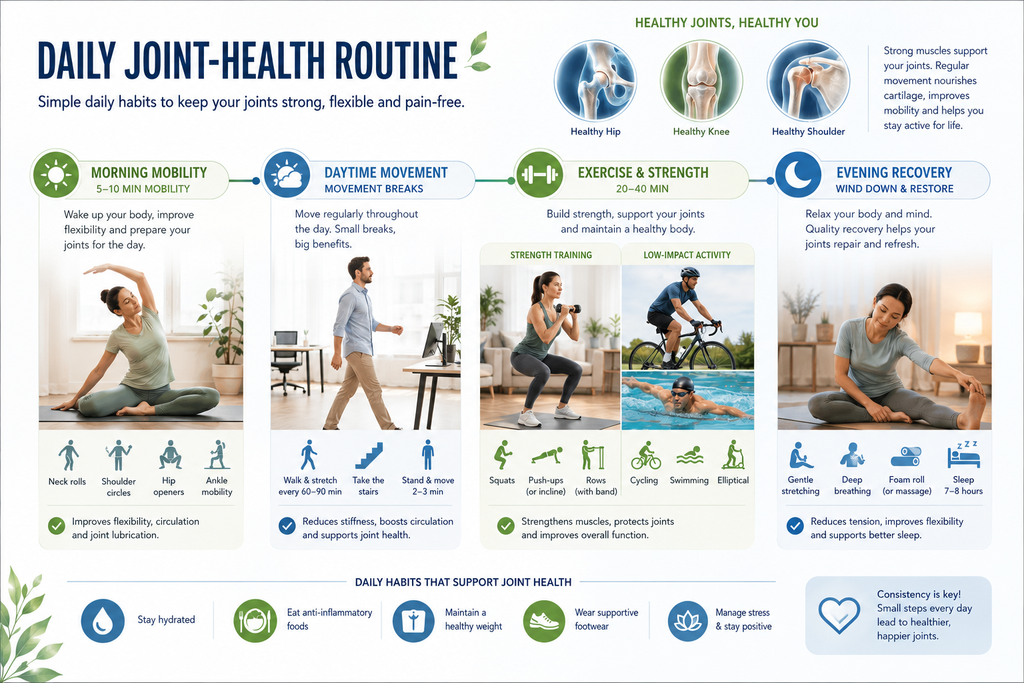
- Morning: Perform 5–10 minutes of gentle mobility movements.
- During the day: Break up long sitting periods with short movement breaks.
- Exercise: Choose walking, cycling, swimming, or another comfortable activity.
- Strength: Perform resistance training about 2 days each week.
- Nutrition: Include protein, vegetables, fruits, whole grains, and healthy fats.
- Recovery: Prioritize adequate sleep and allow recovery after demanding workouts.
- Progression: Increase exercise difficulty gradually rather than suddenly.
In addition, proper technique can reduce unnecessary stress during exercise. If you are learning a new movement, start with a simpler version and focus on controlled form before increasing resistance.
When Should You See a Doctor About Joint Pain or Stiffness?
Persistent, severe, swollen, hot, or injury-related joint symptoms should be evaluated by a healthcare professional rather than managed only with general lifestyle advice. Lifestyle strategies are for general wellness and do not replace diagnosis or treatment.
For example, seek professional evaluation when joint symptoms are severe, persist or worsen, follow a significant injury, or substantially limit normal movement.
Moreover, sudden swelling, pronounced redness or warmth, severe pain, inability to use the joint normally, or other concerning symptoms warrant appropriate medical attention.
If you already have arthritis or another diagnosed condition, ask your healthcare professional which exercises and activity levels are appropriate for you. The CDC specifically advises people with chronic health conditions or disabilities to seek professional guidance when needed.
How Can You Put Joint-Health Advice Into Practice?
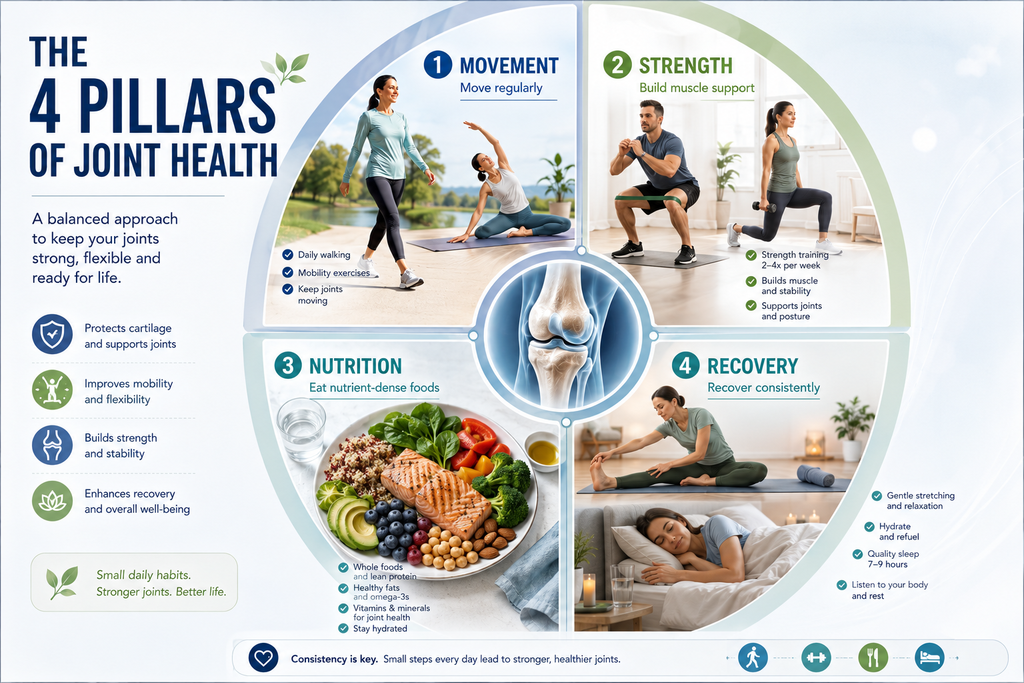
A practical joint-health plan combines movement, strength, mobility, nutrition, and recovery rather than relying on one intervention. The easiest approach is to begin with a few habits and build from there.
Try this four-step plan:
- Start moving: Walk or perform another comfortable aerobic activity several times each week.
- Build strength: Add resistance training twice weekly.
- Improve mobility: Perform gentle range-of-motion exercises regularly.
- Support recovery: Eat a balanced diet, sleep adequately, and increase exercise gradually.
For healthy aging, combine these habits with healthy aging tips.
What’s Next: Build Sustainable Joint-Health Habits
The next step is to choose two or three joint-health habits you can realistically maintain for the next few weeks. Consistency is more useful than creating an overly complicated routine that you cannot sustain.
For example, begin with a 15-minute walk five days per week, two simple strength sessions, and five minutes of mobility work each day. Once that routine feels manageable, gradually increase duration or resistance.
At the same time, monitor how your body responds. A sustainable joint-health routine should support movement without repeatedly pushing through significant pain or worsening symptoms.
Finally, remember that joint health is connected to the health of the whole musculoskeletal system. Regular movement, adequate muscle strength, balanced nutrition, appropriate body-weight management, and recovery all contribute to long-term physical function.
Supplements can be an optional addition to a healthy lifestyle, but they should complement—not replace—a nutrient-dense diet and regular physical activity. If you’re interested in exploring a dedicated joint-health supplement
Conclusion
Joint health is the ability of the joints and surrounding tissues to support comfortable, stable, and functional movement. Improving joint health involves regular physical activity, muscle strengthening, mobility work, balanced nutrition, healthy weight management when appropriate, and adequate recovery.
Moreover, you do not need a perfect routine to begin. Walking regularly, adding strength training, improving mobility, eating a nutrient-dense diet, and progressing gradually can create a strong foundation for healthy movement.
Most importantly, persistent or severe joint symptoms deserve professional evaluation. Build your joint-health habits gradually, stay consistent, and make long-term mobility the goal rather than searching for a quick fix.
Written by myserioi.com Editorial Team — Health and Wellness Content Team
Reviewed by Qualified Healthcare Professional — Medical and Musculoskeletal Health Review
Disclaimer: This article was initially drafted using AI assistance. However, the content has undergone thorough revisions, editing, and fact-checking by human editors and subject matter experts to ensure accuracy. This article provides general educational information and is not a substitute for individualized medical diagnosis or treatment.
Affiliate Disclosure
Affiliate Disclosure: This article may contain affiliate links. If you purchase a product through one of these links, we may earn a commission at no additional cost to you. We only recommend products that we believe may be useful to our readers. Product information, pricing, availability, and claims may change, so please review the official product page before making a purchase.
Health Disclaimer: This content is for informational and educational purposes only and is not intended to diagnose, treat, cure, or prevent any disease or medical condition. Always consult a qualified healthcare professional before starting a new supplement or making significant changes to your exercise or nutrition routine.