
Table of Contents
You’ve probably already noticed that some foods feel much lighter on your stomach than others, especially before exercise or when you want a smaller meal. However, “easy to digest” does not simply mean “healthy” or “digests instantly.” In this guide, you’ll learn which foods are relatively quick to digest, why food composition and preparation matter, and how to build practical meals around your digestion and goals.
Key Takeaways
- Quickly digested foods are foods that the digestive system can process relatively easily compared with heavier meals, although digestion time varies between people.
- Lower-fat, lower-fiber, softer, and well-cooked foods are often easier to tolerate than large meals that are high in fat or very high in fiber.
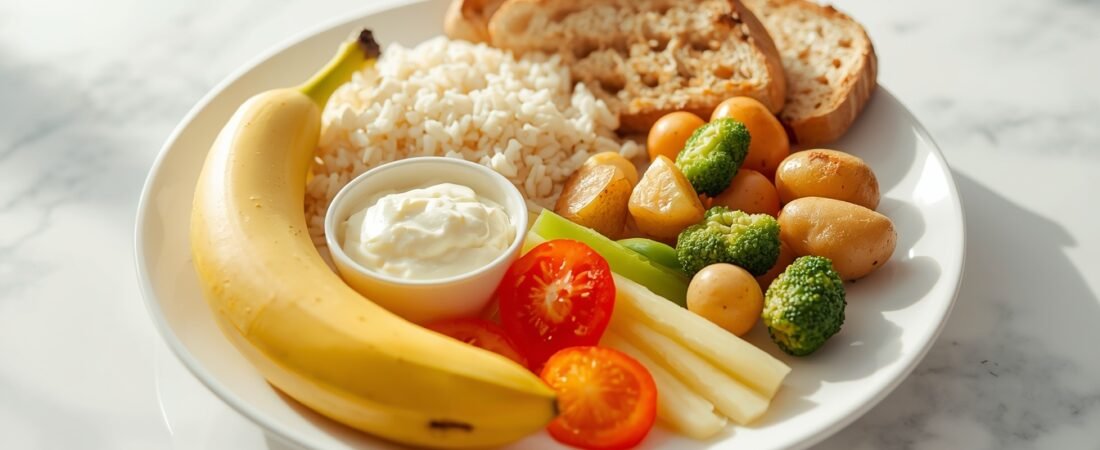
- Bananas, white rice, toast, applesauce, melons, and potatoes can provide relatively simple options when a lighter meal is preferred.
- Food preparation, portion size, meal composition, and individual tolerance can significantly affect how quickly a meal is digested.
- Fast-digesting carbohydrates can be useful before exercise when you want accessible carbohydrate without the heaviness of a large meal.
- Faster digestion does not automatically make food healthier or better for weight loss.
- Persistent digestive symptoms such as pain, vomiting, severe bloating, or ongoing reflux should be discussed with a qualified healthcare professional.
What Are Foods That Are Digested Quickly?
Foods that are digested quickly are foods that the digestive system can process relatively quickly compared with heavier meals, although digestion time varies according to the food, portion size, meal composition, preparation, and individual physiology. Digestion involves mechanical breakdown, stomach processing, nutrient digestion, intestinal absorption, and movement through the gastrointestinal tract.
Moreover, gastric emptying is only one part of digestion, so saying that a food “digests quickly” should not be interpreted as an exact number of minutes. A food can leave the stomach relatively quickly while nutrients continue to be digested and absorbed in the small intestine.
For example, a small serving of white rice may feel lighter than a large meal containing brown rice, beans, cheese, nuts, and added oil. The difference comes from the overall meal composition rather than one food having a universal digestion time.
Why Do Some Foods Digest Faster Than Others?
Food composition strongly influences gastric emptying and digestive comfort. Fat, fiber, meal size, food structure, and processing can all influence how quickly food moves through the stomach.
For example, research comparing meals with different fiber contents found that removing naturally occurring fiber reduced measured gastric emptying time from about 232 minutes to 186 minutes in the study participants. — Source: Benini et al., Gut, 1995. (PubMed)
At the same time, individual physiology matters. Stress, activity, medical conditions, medications, meal size, and previous dietary intake can all influence digestive responses.
Why Do Foods That Digest Quickly Matter?
Quickly digested foods matter because they can provide a lighter eating option when you want accessible energy without a very heavy meal. They can be particularly useful before exercise, when appetite is reduced, or when a person finds large high-fat or high-fiber meals uncomfortable.
For example, someone exercising in the morning may tolerate a banana and toast better than a large breakfast containing fried foods, nuts, and a high-fiber cereal.
Furthermore, fast digestion is not automatically better digestion. High-fiber foods can be highly nutritious and support health even though they may produce greater fullness or slower gastric emptying.
NIDDK guidance for people with delayed stomach emptying commonly emphasizes lower-fat foods, lower-fiber foods, smaller meals, and soft or well-cooked foods when medically appropriate. (NIDDK)
Which Foods Are the Easiest and Quickest to Digest?
The easiest foods to digest are often relatively low in fat and fiber, moderate in portion size, and soft or well-cooked. The following foods are practical examples, but individual tolerance can differ.
| Food | Why it may feel easier to digest | Simple serving idea |
|---|---|---|
| Banana | Soft and relatively low in fiber when ripe | Banana alone or with toast |
| Melon | High water content and soft texture | Fresh melon pieces |
| Applesauce | Cooked and softened fruit | Small bowl |
| White rice | Low-fiber refined grain | Rice with lean protein |
| White toast | Refined, low-fiber carbohydrate | Toast with banana |
| Potatoes without much added fat | Soft when cooked and peeled | Boiled or mashed potato |
| Low-fat yogurt | Soft and relatively low in fat | Plain yogurt if tolerated |
| Eggs | Compact protein source | Soft-boiled or scrambled |
| Refined cereal | Lower in fiber than whole-grain versions | Small bowl with low-fat milk |
| Crackers | Low-fiber refined carbohydrate | Small serving as a snack |
1. Are Bananas Easy to Digest?
Bananas can be an easy-to-digest food for many people, particularly when they are ripe and eaten in a moderate portion. Their soft texture makes them convenient when you want a simple carbohydrate source.
For example, one banana can work as a small snack before exercise when a full meal feels too heavy.
That being said, bananas are not universally tolerated. Some people may experience bloating or discomfort from particular fruits, so your personal response matters more than a general food ranking.
2. Is White Rice a Fast-Digesting Food?
White rice is a relatively low-fiber carbohydrate that can be easier to tolerate than some higher-fiber grains. Removing much of the grain’s outer layers reduces its fiber content compared with brown rice.
For example, a small bowl of plain white rice can provide carbohydrate without the added fat and fiber found in a large fried-rice meal.
However, the preparation matters. Adding substantial oil, butter, creamy sauces, or large portions of fatty meat can make the complete meal heavier even though the rice itself is relatively simple.
3. Are Eggs Easy to Digest?
Eggs can be an easy-to-tolerate protein source for some people, especially when prepared simply and eaten in a moderate portion. Their digestibility can also be influenced by cooking method and the amount of fat added during preparation.
For example, a soft or simply scrambled egg may be easier to tolerate than eggs cooked with large amounts of butter, cheese, or oil.
Research also shows that food processing can alter protein digestion and absorption kinetics, meaning preparation and food structure can influence how proteins are handled during digestion. — Source: Rutherfurd et al., 2023. (PubMed)
If you’re looking for an additional wellness product to complement a balanced diet and active lifestyle, you can explore Nuraville Volca Burn. Review the ingredients, product details, and directions carefully before deciding if it fits your personal weight-management routine.
What Are the Best Foods to Eat Before a Workout?
The best quickly digested foods before exercise are usually carbohydrate-rich choices that are relatively low in fat and fiber and appropriate for your portion tolerance. The goal is to provide usable carbohydrate without creating unnecessary stomach fullness.
For example, practical options include:
- Banana and toast
- Applesauce and crackers
- White rice with a small portion of lean protein
- Low-fiber cereal with low-fat milk, if tolerated
- Toast with a small amount of honey
- Melon with a small serving of yogurt
Moreover, fast-digesting carbohydrates can be useful before exercise because they can provide readily available carbohydrate without the heaviness that some people experience after a large, high-fat or high-fiber meal.
When Should You Eat Fast-Digesting Foods Before Exercise?
The ideal timing depends on portion size, exercise intensity, and individual tolerance rather than one universal rule. A larger meal generally needs more time than a small snack.
For example, a person who dislikes exercising with food in the stomach may prefer a small carbohydrate snack well before training rather than eating a large meal shortly beforehand.
At the same time, experiment during normal training rather than trying an unfamiliar food immediately before an important competition. Your own digestive response is the most useful practical guide.
How Do Fat and Fiber Affect Digestion Speed?
Fat and fiber can influence gastric emptying, with higher-fat and higher-fiber meals often producing slower stomach emptying than simpler meals. This does not mean fat or fiber are unhealthy; it means they can change how filling or quickly emptied a meal feels.
For example, a meal containing fried potatoes, cheese, nuts, and avocado will generally have a different digestive profile from plain potatoes with a small portion of lean protein.
Research has found that high-fat meals can delay gastric emptying compared with lower-fat meals. One controlled study reported gastric-emptying half-times of approximately 102 minutes for a high-fat breakfast versus 95–96 minutes for lower-fat breakfasts. — Source: Clegg et al., Appetite, 2010. (PubMed)
Similarly, fiber can slow gastric emptying in some meal contexts. A clinical study found that a higher-fiber meal took longer to empty from the stomach than a matched lower-fiber meal. — Source: Benini et al., Gut, 1995. (PubMed)
Does Cooking Food Make It Easier to Digest?
Cooking can change the texture and structure of food, which may make some foods easier to chew and tolerate. Heat can soften plant tissues and alter food structure, while processing can also affect protein digestion.
For example, boiled potatoes without their skins are softer than raw potatoes, while cooked vegetables are generally easier to chew than their raw counterparts.
NIDDK guidance for people with gastroparesis specifically includes soft, well-cooked foods and recommends chewing food thoroughly. — Source: NIDDK, 2018. (NIDDK)
What Foods Should You Avoid If You Want Faster Digestion?
Foods that are very high in fat, very high in fiber, extremely large portions, and foods that are difficult to chew may feel heavier or empty from the stomach more slowly. Avoiding them is not necessary for everyone, but reducing them around exercise or during digestive discomfort may help some people.
For example, a large fried meal with creamy sauce and a high-fiber side dish is more likely to feel heavy than a small serving of white rice and lean protein.
Common foods that may be less suitable immediately before exercise include:
- Fried foods
- Very fatty meats
- Large servings of nuts and seeds
- Very high-fiber cereals
- Large bean-based meals
- Heavy cream-based dishes
- Large portions of raw vegetables
Importantly, “avoid” does not mean these foods are unhealthy. Fiber-rich foods, healthy fats, legumes, whole grains, fruits, and vegetables can all be valuable parts of a balanced diet.
Are Quickly Digested Foods Good for Weight Loss?
Quickly digested foods are not automatically better for weight loss because weight management depends on overall energy intake, food quality, activity, appetite, and long-term eating patterns. Digestion speed alone does not determine whether a food supports a healthy body weight.
For example, white rice may digest relatively quickly, but a large portion can still contribute substantial calories, particularly when combined with high-calorie sauces and fats.
Conversely, higher-fiber foods may digest or empty more slowly while helping some people feel fuller for longer.
Therefore, choose foods according to your goal rather than assuming faster digestion is always desirable.
If you’re looking for an additional wellness product to complement a balanced diet and active lifestyle, you can explore Nuraville Volca Burn. Review the ingredients, product details, and directions carefully before deciding if it fits your personal weight-management routine.
How Long Does It Take Different Foods to Digest?
There is no single digestion time for each food because digestion involves several stages and varies with meal composition and individual physiology. Gastric emptying, intestinal digestion, nutrient absorption, and total gastrointestinal transit should not be treated as the same measurement.
For example, researchers use standardized gastric-emptying tests that measure how much food remains in the stomach at different time points rather than assigning every food a fixed digestion duration. A consensus protocol measures gastric emptying at 0, 1, 2, and 4 hours using a standardized low-fat meal. — Source: American Neurogastroenterology and Motility Society/Society of Nuclear Medicine, 2008. (PubMed)
This distinction matters because statements such as “bananas digest in 30 minutes” can create false precision. Food does not follow a universal stopwatch.
What Is the Best Easy-to-Digest Meal for Breakfast?
An easy-to-digest breakfast usually combines a moderate portion of carbohydrate with a tolerable protein source while keeping unnecessary fat and fiber modest. Your ideal breakfast depends on your appetite, activity, and digestive tolerance.
For example, consider:
- Banana + toast + egg — simple carbohydrate with moderate protein.
- White rice + egg — useful when you prefer a savory breakfast.
- Applesauce + toast + low-fat yogurt — soft foods with carbohydrate and protein.
- Low-fiber cereal + low-fat milk — convenient when dairy is tolerated.
- Boiled potato + egg — soft carbohydrate paired with protein.
How Can You Build an Easy-to-Digest Meal?
An easy-to-digest meal can be built by controlling portion size, choosing suitable cooking methods, and combining relatively simple carbohydrates with tolerated protein. You do not need to eliminate entire food groups to create a lighter meal.
For example, use this simple framework:
| Choose | Examples |
|---|---|
| Simple carbohydrate | White rice, toast, potato, crackers |
| Soft fruit | Banana, melon, applesauce |
| Moderate protein | Eggs, low-fat yogurt, lean poultry |
| Cooking method | Boiled, steamed, baked, lightly scrambled |
| Portion | Start moderate rather than very large |
[Insert image: Simple easy-to-digest meal-building diagram showing carbohydrate, protein, portion size, fat, fiber, and cooking method | Alt text: “Build an easy-to-digest meal with simple food choices”]
Moreover, keep your meal simple when you are testing your tolerance. Combining several potentially problematic foods makes it difficult to identify which ingredient caused discomfort.
What Tools Can Help You Find Foods That Work for Your Digestion?
A simple food-and-symptom journal can help identify which foods, portions, and combinations your body tolerates best. You can record the food, approximate portion, preparation method, timing, exercise, and symptoms.
For example, you might record:
- Food: white rice and egg
- Portion: small bowl + one egg
- Timing: two hours before exercise
- Preparation: boiled rice and lightly scrambled egg
- Response: comfortable / bloated / heavy / hungry
[Insert image: Food and digestion tracking journal showing food, portion, timing, preparation, and symptoms | Alt text: “Track foods and digestion symptoms to identify comfortable meals”]
At the same time, you can use free nutrition databases or food-label information to compare fiber, fat, carbohydrate, and protein rather than relying on claims such as “detoxing” or “instant digestion.”
A practical approach is more useful than trying to find a universal list of foods that digest in exactly a certain number of minutes.
What’s Next: How Can You Find Foods That Work for Your Digestion?
The best next step is to test individual foods and portions gradually while paying attention to your body’s response. A food that feels comfortable for one person may cause bloating, reflux, or fullness in another person.
First, start with a small portion of one relatively simple food. For example, try a banana or a small serving of white rice rather than introducing several new foods simultaneously.
Second, record how you feel afterward. Note whether you experience fullness, bloating, reflux, cramping, or other symptoms.
Third, adjust the portion and preparation. A smaller, well-cooked meal may be more comfortable than the same ingredients served in a large or high-fat portion.
Finally, persistent digestive symptoms deserve professional evaluation rather than indefinite dietary restriction. Severe or ongoing pain, repeated vomiting, unexplained weight loss, difficulty swallowing, persistent reflux, or significant digestive changes should be discussed with a qualified healthcare professional.
If you’re looking for an additional wellness product to complement a balanced diet and active lifestyle, you can explore Nuraville Volca Burn. Review the ingredients, product details, and directions carefully before deciding if it fits your personal weight-management routine.
Conclusion
Foods that digest quickly are generally relatively simple, lower-fat, lower-fiber, softer, or well-cooked foods that many people find easier to tolerate. Bananas, melons, applesauce, white rice, toast, potatoes, and certain low-fat protein foods can be useful options depending on your individual response.
Moreover, digestion speed should not become the only measure of a good diet. Food that digests quickly is not necessarily healthier than food that digests slowly; nutritional quality depends on the food’s overall nutrient content and its role in the person’s diet.
By adjusting portion size, preparation, fat, fiber, and meal timing, you can build meals that better match your needs. The best easy-to-digest foods are individual because tolerance depends on portion size, preparation, meal composition, and a person’s digestive response.
Written by myserioi.com Editorial Team — Health and Nutrition Content
Reviewed by Qualified nutrition and healthcare professionals for general educational accuracy.
Disclaimer: This article was initially drafted using AI assistance. However, the content has undergone thorough revisions, editing, and fact-checking by human editors and subject matter experts to ensure accuracy. This article is for general educational purposes and does not replace individualized medical advice.
Affiliate Disclosure
This article may contain affiliate links. If you purchase a product through one of these links, we may earn a commission at no additional cost to you. We only recommend products that we believe may be useful to our readers. However, you should review the product’s ingredients, directions, and safety information and make your own informed decision before purchasing. This content is for general informational purposes and is not a substitute for professional medical advice.