

Table of Contents
You’ve probably already noticed that foods like bananas, rice, toast, and oatmeal can feel easier on the stomach than heavy or greasy meals. However, the food itself is only part of the equation because portion size, cooking method, fat content, fiber, and individual tolerance can also affect how comfortable a meal feels. In this guide, you’ll learn the best easy-to-digest foods, how to prepare them, what foods may be harder to tolerate, and simple meals you can try.
Key Takeaways
- Easy-to-digest foods are generally mild, relatively low in fat, and prepared in ways that make them easier for the digestive system to tolerate.
- Bananas, white rice, oatmeal, toast, potatoes, eggs, lean proteins, and cooked vegetables are commonly used as gentle food choices.
- Cooking, peeling, reducing added fat, and choosing smaller portions can make many foods easier to tolerate.
- Individual digestive tolerance varies, so a food that feels comfortable for one person may cause symptoms in another.
- Fried foods, very fatty meals, heavily spiced foods, and some high-fiber foods may be harder to tolerate when digestion is sensitive.
- Simple meals combining carbohydrates, lean protein, and well-cooked foods can provide practical options when lighter eating is preferred.
- Persistent, severe, or unexplained digestive symptoms require guidance from a qualified healthcare professional rather than relying solely on dietary changes.
What Are Easy-to-Digest Foods?
Easy-to-digest foods are foods that are generally mild, relatively low in fat, and prepared in ways that make them easier for the digestive system to tolerate. Examples include bananas, white rice, potatoes, eggs, lean poultry, fish, toast, broth, and well-cooked vegetables. (MedlinePlus)
Moreover, digestibility is not identical for everyone. A food that feels comfortable for one person can cause bloating, nausea, reflux, or other symptoms in another person.
For example, someone may tolerate yogurt comfortably while another person may feel worse after consuming dairy. Similarly, oatmeal can be a good choice for some people, while a large high-fiber serving may feel uncomfortable for someone experiencing temporary digestive sensitivity.
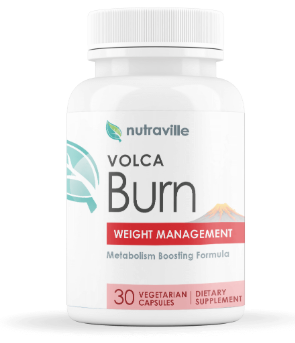
If you’re looking for an additional wellness product to complement a balanced diet and active lifestyle, you can explore Nuraville Volca Burn. Review the ingredients, product details, and directions carefully before deciding if it fits your personal weight-management routine.
Why Are Some Foods Easier to Digest Than Others?
Foods can be easier to tolerate when they are soft, lower in fat, lower in fiber, and cooked thoroughly. Medical nutrition guidance for certain gastrointestinal conditions commonly emphasizes soft, well-cooked foods and smaller meals. (NIDDK)
For example, baked skinless chicken with white rice is generally a gentler combination than fried chicken with a large serving of raw vegetables.
At the same time, “easy to digest” does not mean “better for everyone.” Fiber remains an important nutrient, and adults generally need about 22–34 grams of fiber per day, depending on age and sex — Source: [NIDDK, 2026]. (NIDDK)
Why Are Easy-to-Digest Foods Important?
Easy-to-digest foods are useful when you want meals that are gentle, simple, and less likely to feel heavy. People may choose them during temporary digestive discomfort, recovery from illness, before exercise, or when they simply prefer lighter meals.
First, people recovering from nausea or vomiting may be advised to choose foods that are easier on the stomach once they can tolerate solid foods. The National Cancer Institute lists options such as broth, eggs, skinless poultry, fish, plain pasta, and other relatively gentle foods. (Cancer.gov)
Second, smaller meals can sometimes be easier to manage than very large meals. For certain digestive conditions, NIDDK guidance specifically recommends five or six small meals instead of two or three larger meals. (NIDDK)
In addition, lighter foods can be useful around exercise. Pre-exercise nutrition often emphasizes carbohydrate-rich foods and individualized portions, while lower-fat and lower-fiber choices may reduce the likelihood of gastrointestinal discomfort during exercise. (Johns Hopkins Medicine)
What Are the Best Easy-to-Digest Foods to Eat?
The best easy-to-digest foods commonly include soft fruits, refined grains, potatoes, eggs, lean proteins, broth-based foods, and thoroughly cooked vegetables. Preparation and portion size matter as much as the individual food.
| Food | Why it may be gentle | Simple preparation |
|---|---|---|
| Banana | Soft and low in preparation effort | Eat ripe and plain |
| White rice | Low-fiber carbohydrate | Boil and serve simply |
| Oatmeal | Soft when fully cooked | Cook with water or tolerated milk |
| Toast | Simple, low-fiber option | Choose plain or lightly topped |
| Potato | Soft when cooked | Peel, boil, or bake |
| Applesauce | Soft fruit option | Choose unsweetened |
| Eggs | Convenient protein | Boil or lightly scramble |
| Chicken | Lean protein | Bake or steam without excess fat |
| Fish | Tender protein | Poach, bake, or steam |
| Cooked carrots | Soft vegetable | Steam or boil |
| Broth | Provides fluid and warmth | Choose a low-fat broth |
| Yogurt | May be suitable if tolerated | Choose plain, lower-fat yogurt |
Which Fruits Are Easiest to Digest?
Soft, ripe, peeled, or cooked fruits are often easier to tolerate than large portions of raw, fibrous fruit. Bananas and applesauce are especially common choices in easy-to-digest eating patterns. (MedlinePlus)
For example, a ripe banana can be eaten alone as a snack, while applesauce can accompany toast or oatmeal.
Moreover, preparation can change the texture considerably. Cooked fruit may be easier for some people than raw fruit with tough skins or seeds.
Good options to try include:
- Ripe bananas
- Applesauce
- Melons
- Canned fruit in suitable portions
- Cooked or peeled fruit, depending on tolerance
Which Vegetables Are Easiest to Digest?
Well-cooked vegetables are generally easier to tolerate than large servings of raw vegetables when digestion is sensitive. Cooking softens vegetables and can make their texture easier to manage. (Guy’s and St Thomas’ NHS Trust)
For example, steamed carrots or peeled potatoes may feel gentler than a large raw salad.
Try vegetables such as:
- Carrots
- Potatoes
- Pumpkin
- Squash
- Well-cooked spinach
- Peeled zucchini
That being said, individual tolerance matters. Foods such as broccoli, cabbage, onions, and other gas-producing vegetables can be uncomfortable for some people. (MedlinePlus)
What Are the Best Easy-to-Digest Protein Sources?
Easy-to-digest protein sources generally include eggs, tender poultry, fish, tofu, and suitable low-fat dairy products. Preparation should focus on reducing excess fat and avoiding heavy sauces. (MedlinePlus)
For example, baked skinless chicken with white rice is a simpler option than deep-fried chicken with a creamy sauce.
Other practical choices include:
- Boiled or lightly scrambled eggs
- Baked skinless chicken
- Poached fish
- Tender turkey
- Soft tofu
- Low-fat yogurt if tolerated
If you’re looking for an additional wellness product to complement a balanced diet and active lifestyle, you can explore Nuraville Volca Burn. Review the ingredients, product details, and directions carefully before deciding if it fits your personal weight-management routine.
What Are the Best Easy-to-Digest Carbohydrates?
Common easy-to-digest carbohydrates include white rice, toast, plain pasta, potatoes, oatmeal, and other soft cooked grains. These foods can provide carbohydrates without requiring large amounts of preparation or heavy sauces.
For example, plain white rice paired with baked fish creates a simple meal containing both carbohydrate and protein.
Importantly, lower-fiber carbohydrates may be preferable temporarily when someone’s digestive system is sensitive. NHS guidance for diarrhea recommends options such as white bread, pasta, and rice instead of wholegrain alternatives during the acute period. (Guy’s and St Thomas’ NHS Trust)
What Are Some Easy-to-Digest Breakfast Foods?
Easy-to-digest breakfasts can include oatmeal, toast, bananas, eggs, applesauce, or simple rice-based meals. The goal is to keep the meal moderate in portion size and avoid excessive fat or heavy toppings.
For example, try:
- Oatmeal + ripe banana
- Toast + boiled egg
- Applesauce + plain toast
- Soft scrambled eggs + toast
- Rice porridge + egg
Moreover, a smaller breakfast may be preferable if a large meal makes you feel uncomfortable.
What Are Some Easy-to-Digest Meals for Lunch and Dinner?
Easy-to-digest lunch and dinner meals usually combine a simple carbohydrate, lean protein, and soft cooked foods. This structure provides a practical way to build a satisfying meal without relying on fried ingredients or heavy sauces.
Try these combinations:
- White rice + baked chicken + cooked carrots
- Mashed potato + baked fish + cooked squash
- Plain pasta + lean chicken + cooked vegetables
- Rice + scrambled eggs + cooked spinach
- Chicken broth + noodles + tender vegetables
- Baked potato + low-fat yogurt or cottage cheese, if tolerated
Furthermore, broth-based meals can contribute fluid intake. During diarrhea, for example, NHS guidance emphasizes fluids and suggests small, frequent meals. About 1.6–2 liters of fluid per day is suggested in its adult diarrhea guidance — Source: [Guy’s and St Thomas’ NHS Foundation Trust, 2026]. (Guy’s and St Thomas’ NHS Trust)
Which Foods May Be Harder to Digest?
Foods that are high in fat, heavily fried, very spicy, highly fibrous, or difficult to chew may be harder to tolerate when digestion is sensitive. Individual responses vary, so these foods are not automatically unhealthy or unsuitable for everyone.
Common foods that may cause problems during temporary digestive sensitivity include:
- Fried foods
- Very fatty meats
- Heavy cream-based sauces
- Very spicy dishes
- Large servings of beans
- Bran and very high-fiber cereals
- Large raw salads
- Some cruciferous vegetables
- Foods with tough skins or seeds
- Alcohol and highly caffeinated drinks for some people
For example, a large serving of fried food may contain substantially more fat than the same ingredients prepared by baking or steaming.
However, fiber should not be permanently restricted without a reason. Current U.S. nutrition guidance emphasizes nutrient-dense foods, including vegetables, fruits, whole grains, and other fiber-containing foods. — Source: [HHS and USDA, Dietary Guidelines 2025–2030]. (Health.gov)
How Can You Make Foods Easier to Digest?
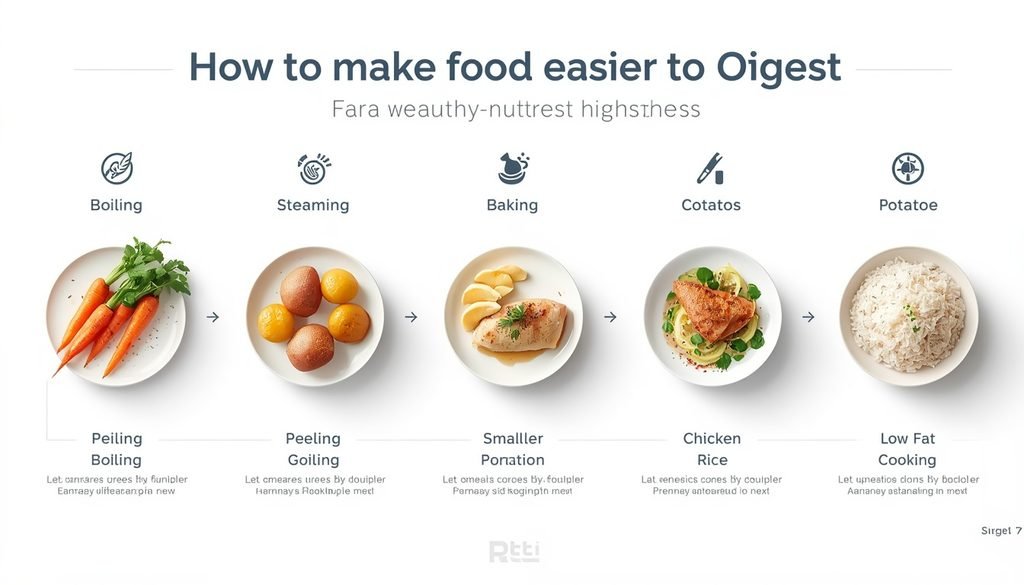
You can often make foods easier to tolerate by cooking them thoroughly, reducing excess fat, removing tough skins, and choosing smaller portions. These simple preparation changes can alter texture, fiber exposure, and the overall heaviness of a meal.
Try these methods:
- Boil or steam vegetables until soft.
- Peel fruits and vegetables when skins seem difficult to tolerate.
- Bake, poach, or steam proteins instead of deep-frying them.
- Remove visible fat and poultry skin when appropriate.
- Choose smaller portions instead of very large meals.
- Eat slowly and chew thoroughly.
- Keep sauces and spices simple when your stomach feels sensitive.
- Drink fluids appropriately throughout the day.
For example, replacing fried potatoes with peeled boiled potatoes can create a substantially lighter meal.
What Are the Best Easy-to-Digest Foods Before a Workout?
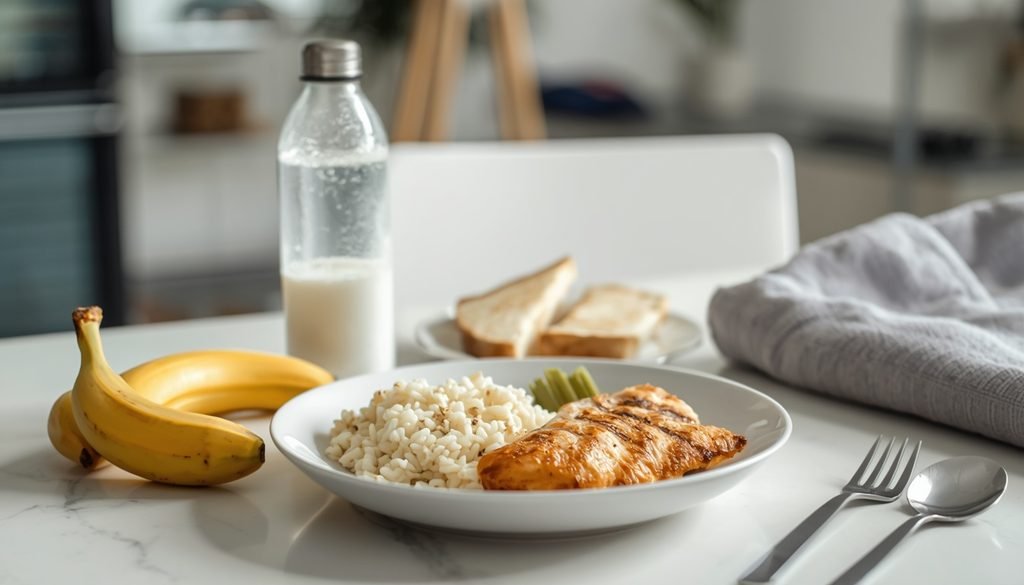
The best pre-workout foods are usually familiar carbohydrate-rich foods that you personally tolerate well, with lower fat and fiber when gastrointestinal comfort is a priority. Timing and portion size should match the workout and your individual needs.
For example, a banana with toast can work as a simple snack before a shorter workout, while rice with a small amount of lean protein may suit someone eating several hours before training.
Sports nutrition guidance commonly recommends carbohydrate intake before prolonged exercise, with individual requirements depending on body size, exercise duration, and timing. One position stand describes 1–2 grams of carbohydrate per kilogram 3–4 hours before competition as a general guideline — Source: [International Society of Sports Nutrition, 2008]. (PubMed Central (PMC))
Good practical choices include:
- Banana
- Toast
- White rice
- Plain oatmeal
- Rice cakes
- Potato
- Small serving of lean protein with carbohydrate
[Internal link: best foods before a workout → suggested target page/topic: pre-workout nutrition]
Are Easy-to-Digest Foods Suitable for Everyone?
Easy-to-digest foods are not a universal diet because digestive tolerance differs between individuals and medical conditions. A food that works well during temporary stomach upset may not be appropriate as a long-term restrictive diet.
For example, someone with constipation may actually need adequate fiber and fluids rather than prolonged low-fiber eating. NIDDK recommends adults generally consume 22–34 grams of fiber daily, while increasing fiber gradually when needed. — Source: [NIDDK, 2026]. (NIDDK)
Similarly, people with conditions such as IBS may have individualized dietary triggers. NIDDK notes that different dietary changes can help different people with IBS, and a dietitian may be useful for individualized guidance. (NIDDK)
Therefore, use easy-to-digest foods as a practical short-term or situation-specific strategy, rather than assuming that low-fiber or highly restrictive eating is healthiest for everyone.
When Should You See a Doctor About Digestive Problems?
You should seek medical advice for persistent, severe, recurrent, or unexplained digestive symptoms rather than relying only on dietary changes. Food choices may support comfort, but they cannot diagnose or treat an underlying medical condition.
For example, diarrhea that does not settle, persistent vomiting, severe abdominal pain, dehydration, unexplained weight loss, blood in stool, or recurring digestive problems deserves professional evaluation.
Moreover, NHS guidance advises contacting a healthcare professional when diarrhea continues rather than relying solely on dietary management. (Guy’s and St Thomas’ NHS Trust)
If symptoms are significant or ongoing, a doctor or registered dietitian can help identify whether a specific food intolerance, digestive disorder, medication effect, infection, or another issue may be involved.
What Are Some Easy-to-Digest Meal and Snack Ideas?
Easy-to-digest meals work best when you combine familiar foods in simple portions and adjust the ingredients according to your tolerance. You do not need complicated recipes to create a gentle meal.
| Meal | Easy combination |
|---|---|
| Breakfast | Oatmeal + banana |
| Breakfast | Toast + boiled egg |
| Snack | Applesauce + toast |
| Snack | Banana + rice cake |
| Lunch | White rice + baked chicken + carrots |
| Lunch | Potato + baked fish + cooked squash |
| Dinner | Plain pasta + lean chicken + cooked vegetables |
| Dinner | Broth + noodles + tender chicken |
For example, a simple dinner of white rice, baked chicken, and cooked carrots provides a practical combination of carbohydrate, protein, and cooked produce.
What Tools Can Help You Build an Easy-to-Digest Meal Plan?
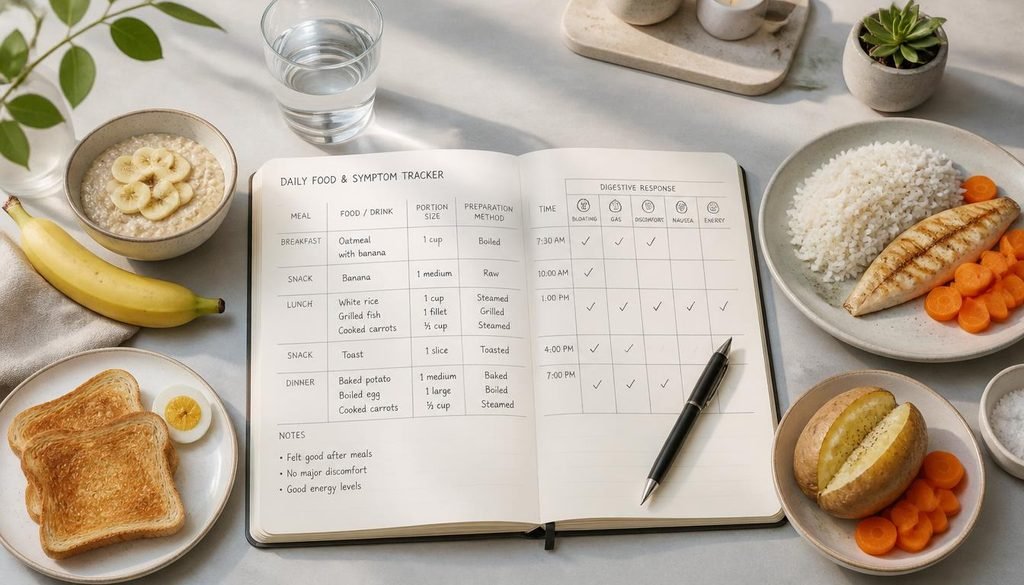
A simple food-and-symptom journal can help you identify which foods and portions you personally tolerate best. You can record the food, preparation method, portion size, timing, and symptoms afterward.
For example, write down “white rice + baked fish, small portion, comfortable” rather than simply recording “rice.” This creates more useful information because preparation and portion size can affect tolerance.
You can also use free nutrition resources such as the USDA’s current dietary guidance to build a balanced long-term eating pattern rather than restricting foods unnecessarily. Current U.S. Dietary Guidelines emphasize nutrient-dense foods including protein, dairy, vegetables, fruits, healthy fats, and whole grains. — Source: [HHS and USDA, 2026]. (Health.gov)
What’s Next: How Do You Build Your Own Easy-to-Digest Meal Plan?
You can build an easy-to-digest meal plan by combining a gentle carbohydrate, lean protein, well-cooked produce, and appropriate fluids. This framework keeps meal planning simple while allowing you to adjust foods according to personal tolerance.
Start with this four-part formula:
- Choose a carbohydrate: white rice, potato, toast, oatmeal, or plain pasta.
- Add lean protein: eggs, fish, chicken, turkey, or tofu.
- Add cooked produce: carrots, squash, pumpkin, or another tolerated vegetable.
- Include fluids: water, broth, or another suitable drink.
For example, a simple lunch could be white rice + baked chicken + cooked carrots + water.
Next, change only one ingredient at a time if you’re trying to identify a trigger. This makes it easier to understand which food, portion, or preparation method may be responsible for discomfort.
If you’re looking for an additional wellness product to complement a balanced diet and active lifestyle, you can explore Nuraville Volca Burn. Review the ingredients, product details, and directions carefully before deciding if it fits your personal weight-management routine.
Conclusion
Easy-to-digest foods are generally simple, mild foods that can be prepared with less fat, softer textures, and manageable portions. Bananas, rice, oatmeal, toast, potatoes, eggs, lean proteins, broth, and cooked vegetables are practical examples.
Ultimately, digestibility is individual. Start with foods you already tolerate, keep portions moderate, prepare foods simply, and gradually return to a broader diet as your digestion improves.
If digestive symptoms are persistent, severe, or unexplained, seek advice from a qualified healthcare professional instead of depending solely on an easy-to-digest-foods diet.
Written by myserioi.com Editorial Team — Health and nutrition content team at Myserioi.com, focused on practical, reader-friendly wellness education.
Reviewed by Qualified healthcare professional or registered dietitian — Final medical and nutrition review should be completed by an appropriately credentialed professional before publication.
Disclaimer: This article was initially drafted using AI assistance. However, the content has undergone thorough revisions, editing, and fact-checking by human editors and subject matter experts to ensure accuracy. This article provides general nutrition information and is not a substitute for individualized medical advice.
Affiliate Disclosure
This article may contain affiliate links. If you purchase a product through one of these links, we may earn a small commission at no additional cost to you. We only recommend products or services that we believe may be useful to our readers. Our recommendations and opinions are independent and are not influenced by affiliate commissions.