

Table of Contents
You’ve probably already brushed your teeth carefully, yet your breath still smells unpleasant afterward. Brushing cleans your tooth surfaces, but odor can come from your tongue, gums, dry mouth, food, dental problems, or other causes that brushing alone does not address. In this guide, you’ll learn how to identify the likely cause, improve your daily routine, and know when persistent bad breath deserves professional attention.
Key Takeaways
- Bad breath, or halitosis, is persistent or recurrent unpleasant breath odor that can have oral, dietary, medication-related, or other health-related causes.
- Tongue bacteria, plaque, gum disease, dry mouth, certain foods, tobacco, and some medications can contribute to bad breath even after brushing.
- Complete oral hygiene includes brushing twice daily, cleaning between the teeth daily, and cleaning the tongue rather than relying on tooth brushing alone.
- Hydration and saliva production help control the environment in which odor-producing bacteria can thrive.
- Mouthwash can complement oral hygiene but does not replace brushing, tongue cleaning, or cleaning between the teeth.
- Persistent bad breath may require a dental examination to identify problems such as gum disease, cavities, or other oral conditions.
- Finding the underlying cause is usually more useful than repeatedly masking the odor with mints or cosmetic mouthwash.
What Is Bad Breath or Halitosis?
Halitosis is persistent or recurrent unpleasant breath odor that can result from oral, dietary, medication-related, or other health factors. Most bad breath originates in the mouth, where bacteria can break down food particles and other substances and produce foul-smelling compounds.
First, temporary breath odor is common and can occur after eating strongly flavored foods, waking up, or going several hours without eating or drinking. For example, morning breath can occur because saliva production naturally decreases during sleep, allowing odor-producing conditions to develop.
Moreover, persistent bad breath is different because the odor continues or repeatedly returns despite reasonable oral hygiene. Persistent halitosis does not automatically mean you have a serious disease, but it can indicate an oral-health issue that deserves attention.
Why Does Bad Breath Matter Even If You Brush Regularly?
Persistent bad breath matters because brushing alone may not remove every source of odor in the mouth. Tooth brushing primarily cleans tooth surfaces, while bacteria and debris can remain on the tongue, between teeth, around the gums, or on dental appliances.
First, plaque is a sticky film containing bacteria that forms on teeth. If plaque remains around the gums, it can contribute to gingivitis and periodontal disease, both of which can be associated with persistent bad breath.
For example, persistent bad breath accompanied by red, swollen, or bleeding gums deserves a dental evaluation, particularly if the symptoms continue despite regular brushing and interdental cleaning. NIDCR lists persistent bad breath among the symptoms that can occur with gum disease.
Why Does My Breath Still Smell Bad After Brushing My Teeth?
Bad breath after brushing usually means that the odor source is not being fully addressed by brushing alone. The most common possibilities include tongue bacteria, plaque, gum problems, dry mouth, food, tobacco, dental appliances, and certain medicines or health conditions.
Can Tongue Bacteria Cause Bad Breath Even After Brushing?
Tongue bacteria can cause bad breath because the uneven surface of the tongue can trap odor-producing bacteria and debris. The back of the tongue is particularly relevant because it can provide an environment where these compounds accumulate.
Next, inspect your tongue in good lighting. A visible coating does not prove that you have a disease, but gently cleaning the tongue can remove some of the material that contributes to odor.
For example, if your teeth feel clean immediately after brushing but your breath becomes unpleasant again soon afterward, tongue cleaning may be an important missing part of your routine.
Can Gum Disease Cause Persistent Bad Breath?
Gum disease can cause persistent bad breath because inflammation and deeper spaces around affected teeth can harbor odor-producing bacteria. Symptoms can include red or swollen gums, bleeding during brushing, gum recession, loose or sensitive teeth, and persistent bad breath.
Additionally, advanced periodontal disease can create deeper pockets around teeth where bacteria accumulate. NIDCR notes that healthy gum pockets are usually about 1–3 millimeters deep, while deeper pockets can indicate periodontal disease. — Source: NIDCR, 2026
Therefore, do not try to permanently cover gum-related odor with breath mints. A dentist can examine your gums and determine whether professional treatment is necessary.
Can Dry Mouth Make Your Breath Smell Bad?
Dry mouth can make bad breath worse because reduced saliva means less natural cleansing of the mouth. Saliva helps wash away food particles and supports a healthy oral environment, while persistent dry mouth can also increase the risk of tooth decay and oral infections.
Furthermore, dry mouth can be caused by dehydration, mouth breathing, tobacco, certain medicines, or health conditions. NIDCR notes that hundreds of medications can reduce saliva production, including some medicines used for high blood pressure, depression, and bladder-control problems.
For example, someone who wakes with a sticky mouth and unpleasant breath may have a dry-mouth problem rather than inadequate tooth brushing.
NIDCR recommends practical measures such as drinking fluids, using sugar-free gum to stimulate saliva, and avoiding tobacco and alcohol when appropriate. — Source: NIDCR, 2024
Can Cavities Cause Bad Breath?
Cavities and other dental infections can contribute to bad breath because damaged areas can collect bacteria and food debris. Tooth decay is one of the oral conditions that Mayo Clinic identifies as a possible cause of bad breath.
Similarly, a cavity may produce other symptoms such as tooth sensitivity, pain, a bad taste, or discomfort while eating. However, the absence of pain does not necessarily prove that a tooth is healthy.
As a result, persistent odor that seems to come from one particular area of the mouth should be checked by a dentist rather than repeatedly treated with mouthwash.
Can Food, Tobacco, or Dental Appliances Cause Bad Breath?
Foods, tobacco, dentures, braces, and other oral appliances can contribute to bad breath even when you brush regularly. Garlic, onions, and certain spices can affect breath, while tobacco can create unpleasant odor and increase the risk of gum disease.
Meanwhile, dentures and removable or fixed appliances can collect food particles and bacteria when they are not cleaned appropriately. For example, brushing your natural teeth does not clean a removable denture unless you clean the appliance separately.
Why Does My Breath Smell Bad Even After Brushing and Flossing?
Bad breath can persist after brushing and flossing when the main cause is tongue bacteria, dry mouth, gum disease, dental problems, food, tobacco, or another condition. Brushing and flossing are essential, but they do not guarantee that every possible source of odor has been eliminated.
First, consider whether you clean your tongue. Second, consider whether your mouth feels unusually dry. Third, look for gum bleeding, swelling, tooth pain, or persistent bad taste.
Additionally, review your medications if dry mouth started after beginning a new medicine. Do not stop a prescribed medication on your own; ask your doctor or pharmacist whether dry mouth could be a side effect.
Moreover, conditions outside the mouth can occasionally contribute to bad breath. Mayo Clinic lists tonsil stones, nasal or sinus conditions, postnasal drip, GERD, and some systemic diseases among possible causes.
How Can I Tell What Is Causing My Bad Breath?
You can narrow down the likely cause of persistent bad breath by systematically checking your tongue, gums, teeth, saliva, diet, tobacco use, and oral appliances. This process cannot diagnose a medical condition, but it can help you identify what deserves attention.
Step 1: Check Your Tongue
First, look for a noticeable coating on the tongue and consider whether you clean it gently every day. A tongue cleaner or soft toothbrush can be used carefully without aggressive scraping.
Step 2: Check Between Your Teeth
Next, notice whether food frequently becomes trapped between your teeth. Daily interdental cleaning removes plaque and food particles that brushing cannot effectively reach.
Step 3: Check Your Gums and Teeth
Then, look for bleeding, swelling, tenderness, recession, loose teeth, sensitivity, or tooth pain. These symptoms can provide important clues that a dental examination is appropriate.
Step 4: Check for Dry Mouth
After that, ask whether your mouth feels sticky or dry, particularly when you wake up. Persistent dry mouth is worth discussing with a dentist or doctor because it can have multiple causes.
Step 5: Review Your Habits
Finally, consider recent changes in food, tobacco use, hydration, medications, mouth breathing, or dental appliances. Keeping a short symptom diary can help you notice patterns.
| Possible contributor | Clues to look for | Helpful first step |
|---|---|---|
| Tongue bacteria | Tongue coating or odor returning quickly | Gentle daily tongue cleaning |
| Plaque | Sticky buildup around teeth | Brush and clean between teeth |
| Gum disease | Bleeding, swelling, tenderness | Dental examination |
| Dry mouth | Sticky mouth, thirst, morning odor | Hydration and professional review |
| Food | Odor after garlic, onions, spices | Identify and limit triggers |
| Tobacco | Persistent tobacco odor | Stop tobacco use |
| Dental appliances | Odor around dentures/braces | Clean appliances correctly |
| Tooth problems | Pain, sensitivity, bad taste | Dental examination |
What Is the Best Way to Get Rid of Bad Breath Naturally?
The best non-medication approach to bad breath is consistent oral hygiene combined with adequate hydration and treatment of any underlying dental problem. No single natural remedy reliably eliminates persistent halitosis when an underlying condition is responsible.
First, brush your teeth at least twice a day with fluoride toothpaste. Mayo Clinic recommends regular brushing with fluoride-containing toothpaste as part of bad-breath prevention.
Second, clean between your teeth at least once daily. Floss or use an interdental brush according to what works best for your mouth.
Third, clean your tongue gently. Fourth, drink enough fluids to avoid dehydration, particularly if your mouth feels dry.
Finally, avoid relying on strong mints or repeated cosmetic rinses to hide persistent odor. Treating the source is more useful than repeatedly masking the smell.
Does a Tongue Scraper Help With Bad Breath?
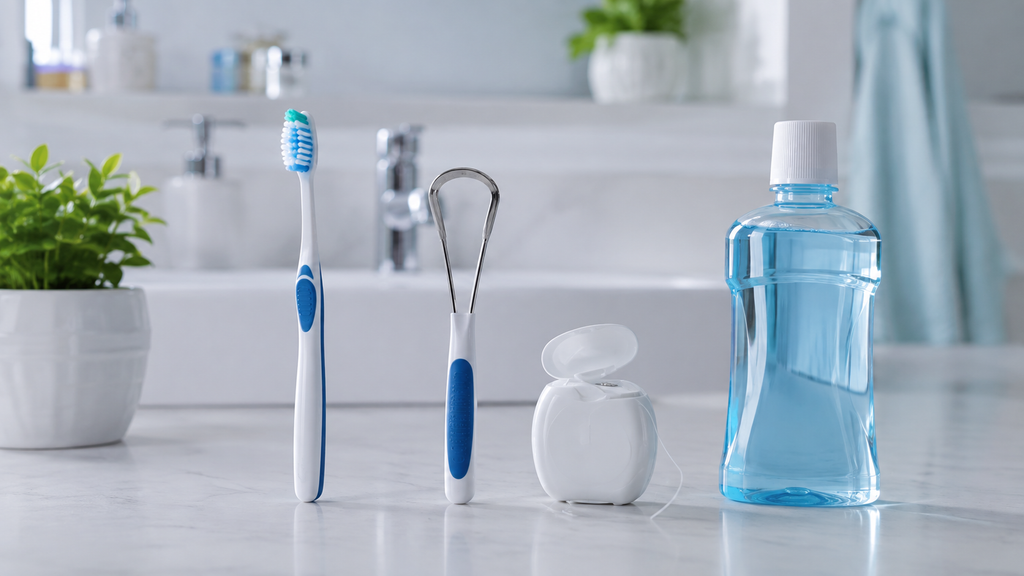
A tongue scraper can help reduce tongue coating and may reduce odor by removing material from the tongue surface. However, it should be viewed as an addition to normal oral hygiene rather than a replacement for brushing or interdental cleaning.
First, use the scraper gently and follow the manufacturer’s instructions. Avoid scraping aggressively because excessive pressure can irritate the tongue.
Next, rinse the scraper after use and keep it clean. For people who dislike tongue scrapers, a soft toothbrush can also be used to clean the tongue.

Does Mouthwash Get Rid of Bad Breath Permanently?
Mouthwash does not necessarily eliminate the underlying cause of persistent bad breath. Cosmetic mouthrinses can temporarily mask odor, while some therapeutic formulations contain ingredients intended to reduce odor-related bacteria or compounds.
For example, the American Dental Association explains that cosmetic mouthrinses can provide temporary odor masking, while therapeutic mouthrinses may offer longer-term control depending on their active ingredients. — Source: American Dental Association, 2026
Therefore, choose mouthwash based on your specific oral-health needs rather than assuming the strongest-tasting product is the best. Mouthwash should complement brushing and interdental cleaning, not replace them.
How Long Should Bad Breath Last After Brushing?
Ordinary temporary breath odor should improve after effective oral cleaning, but persistent or repeatedly returning bad breath deserves attention. The exact duration varies because the cause matters more than a fixed number of hours.
For example, odor after eating garlic may continue because compounds from the food can affect breath after digestion, while morning breath is associated with reduced saliva during sleep.
At the same time, bad breath that repeatedly returns despite brushing, tongue cleaning, and interdental cleaning should not simply be ignored. A dentist can assess whether plaque, gum disease, cavities, or another oral problem is responsible.
Which Tools Can Help With Bad Breath?
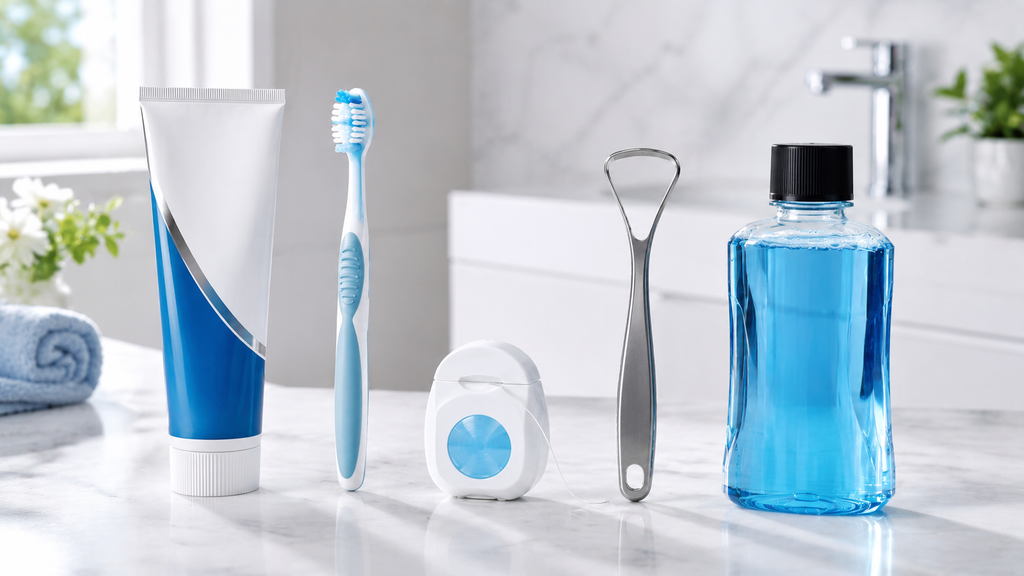
The most useful bad-breath tools support the basic tasks of removing plaque, cleaning the tongue, maintaining saliva, and addressing individual oral-health needs. No tool works equally well for every person.
Toothbrush and Fluoride Toothpaste
First, use a soft-bristled toothbrush and fluoride toothpaste. Mayo Clinic recommends replacing a toothbrush when it becomes frayed, generally around every 3–4 months or sooner when needed. — Source: Mayo Clinic, 2023
Floss or Interdental Brushes
Next, use floss or an interdental brush to clean spaces that a toothbrush cannot reach. This is especially useful when food frequently becomes trapped between teeth.
Tongue Cleaner
Then, consider a tongue scraper if tongue coating appears to contribute to odor. Use gentle pressure rather than aggressive scraping.
Mouthwash
Finally, consider an appropriate mouthwash as an adjunct, particularly if a dentist recommends a therapeutic formulation for your needs.
When Should I See a Dentist About Persistent Bad Breath?
You should see a dentist when bad breath persists despite consistent oral hygiene or occurs with signs of dental or gum problems. A professional examination can identify causes that are difficult to detect at home.
First, schedule a dental evaluation if you notice:
- Bleeding or swollen gums
- Tooth pain or sensitivity
- Loose teeth
- Persistent bad taste
- Mouth sores that do not resolve
- Persistent dry mouth
- Bad breath that does not improve with good oral hygiene
- Problems with dentures or other dental appliances
Moreover, dentists can assess the teeth, gums, tongue, and other oral tissues and may determine whether further medical evaluation is needed. Mayo Clinic notes that dentists may also ask about medications, diet, mouth breathing, allergies, sinus problems, and other factors during an evaluation.
What’s Next: How to Build a Daily Routine for Fresher Breath
A simple daily oral-care routine combines tooth brushing, interdental cleaning, tongue cleaning, hydration, and appropriate dental care. Consistency matters more than constantly switching between breath-freshening products.
Morning
First, brush your teeth with fluoride toothpaste and gently clean your tongue. Then drink water, particularly if your mouth feels dry after sleeping.
During the Day
Next, drink water regularly and clean between your teeth once each day. If certain foods consistently cause noticeable odor, identify those triggers and manage them appropriately.
Night
Finally, brush your teeth again before bed and clean your dental appliances according to their care instructions. Nighttime cleaning is especially important because your mouth naturally produces less saliva while you sleep.
A practical routine can look like this:
- Brush twice daily with fluoride toothpaste.
- Clean between teeth daily with floss or an interdental brush.
- Clean your tongue gently once daily.
- Drink adequate fluids throughout the day.
- Avoid tobacco and limit habits that worsen dry mouth.
- Clean dentures or appliances as recommended.
- See a dentist if persistent odor does not improve.

Conclusion
Brushing is essential for fresh breath, but it is only one part of complete oral hygiene. Tongue bacteria, plaque, gum disease, cavities, dry mouth, food, tobacco, dental appliances, medications, and other conditions can contribute to bad breath even when you brush regularly.
Ultimately, complete oral hygiene for managing bad breath includes brushing twice daily, cleaning between the teeth daily, and cleaning the tongue. Mouthwash can complement these habits but should not replace them.
If your breath still smells bad after consistently improving your routine, do not assume you simply need a stronger mouthwash. Persistent bad breath should be evaluated by a dentist when it does not improve with consistent oral hygiene or occurs with symptoms such as bleeding gums, tooth pain, swelling, or other oral problems.
Written by myserioi.com Editorial Team — Health & Wellness Content Team
Reviewed by Dental/Oral Health Reviewer — qualified dental professional should review before publication
Disclaimer: This article was initially drafted using AI assistance. However, the content should undergo thorough human editing, medical/dental fact-checking, and review by a qualified subject matter expert before publication. This article is for educational purposes and does not diagnose or treat individual medical conditions.
Affiliate Disclosure
Some of the links on this website are affiliate links. This means that if you click a link and make a purchase, I may earn a small commission at no extra cost to you.
I only recommend products, services, and tools that I believe may be useful to my readers. Your purchase price remains the same whether you use an affiliate link or visit the company directly.
Thank you for supporting this website.