
Table of Contents
Many people notice a few drops of urine leaking when they sneeze, cough, laugh, or exercise and simply try to ignore it. However, this pattern can have a specific cause and may improve with the right approach. In this guide, you’ll learn how to stop urine leakage when sneezing, strengthen the muscles that support bladder control, adjust helpful daily habits, and recognize when professional care is appropriate.
Key Takeaways
- Stress urinary incontinence causes urine leakage when activities such as sneezing, coughing, laughing, or lifting increase pressure on the bladder.
- Pelvic-floor muscle training can improve bladder control when it is performed correctly and consistently.
- Healthy bowel habits, appropriate fluid habits, and managing factors that increase abdominal pressure can support bladder control.
- A healthcare professional can determine whether leakage is stress incontinence or another urinary problem and recommend appropriate treatment.
- Recurring urine leakage is common but should not automatically be considered a normal or unavoidable part of aging or childbirth.
- Blood in the urine, painful urination, fever, severe pain, difficulty urinating, or sudden significant changes in bladder control require medical attention.
- A symptom diary and consistent pelvic-floor routine can help you understand your triggers and take practical next steps.
What Causes Urine Leakage When Sneezing?
Stress urinary incontinence is urine leakage that occurs when pressure on the bladder increases during activities such as sneezing, coughing, laughing, exercising, or lifting. (Mayo Clinic)
First, a sneeze creates a sudden increase in pressure inside the abdomen. For example, if your bladder contains urine and your pelvic-floor muscles cannot provide enough support at that moment, a small amount of urine may escape through the urethra.
Moreover, pelvic-floor weakness is one common reason this happens. Pregnancy, childbirth, menopause, aging, pelvic surgery, and other factors can affect the muscles and structures involved in bladder control. (NIDDK)
Is Urine Leakage When Sneezing a Sign of Stress Urinary Incontinence?
Urine leakage that happens specifically with sneezing, coughing, laughing, exercise, or lifting is characteristic of stress urinary incontinence. For example, someone may remain completely dry while sitting quietly but leak a few drops when a strong sneeze occurs. (Mayo Clinic)
At the same time, not every type of urinary leakage is stress incontinence. Urge incontinence, for example, involves a sudden strong need to urinate followed by involuntary leakage, while mixed incontinence combines stress and urgency symptoms. (Mayo Clinic)
Furthermore, urinary incontinence is common and is not necessarily an unavoidable consequence of aging. NIDDK estimates that approximately half of women experience urinary incontinence at some point, although individual experiences and definitions vary. — Source: National Institute of Diabetes and Digestive and Kidney Diseases, 2026 (NIDDK)
Why Does Urine Leakage When Sneezing Matter?
Recurring urine leakage matters because it can affect daily activities, confidence, exercise, and quality of life even when the amount of urine is small. Mayo Clinic notes that frequent incontinence can lead people to restrict activities and social interactions. (Mayo Clinic)
First, occasional leakage may seem harmless, but repeated episodes can cause people to avoid exercise, laughter, travel, or social situations. For example, someone who worries about leaking during a workout may gradually stop exercising even though physical activity remains important for general health.
In addition, bladder leakage deserves attention because it can often be managed or treated. NIDDK explains that pelvic-floor exercises, lifestyle measures, bladder training for appropriate conditions, and medical treatments may all have a role depending on the type of incontinence. (NIDDK)
Finally, recurring leakage should not automatically be dismissed as something you must live with. Bladder leakage is common, but common does not mean untreatable. Professional assessment can help determine the underlying type and guide treatment.
How Can You Stop Urine Leakage When Sneezing?
You can reduce urine leakage when sneezing by improving pelvic-floor strength, managing constipation, reviewing bladder habits, and using practical pressure-management strategies. The best approach depends on why the leakage occurs.
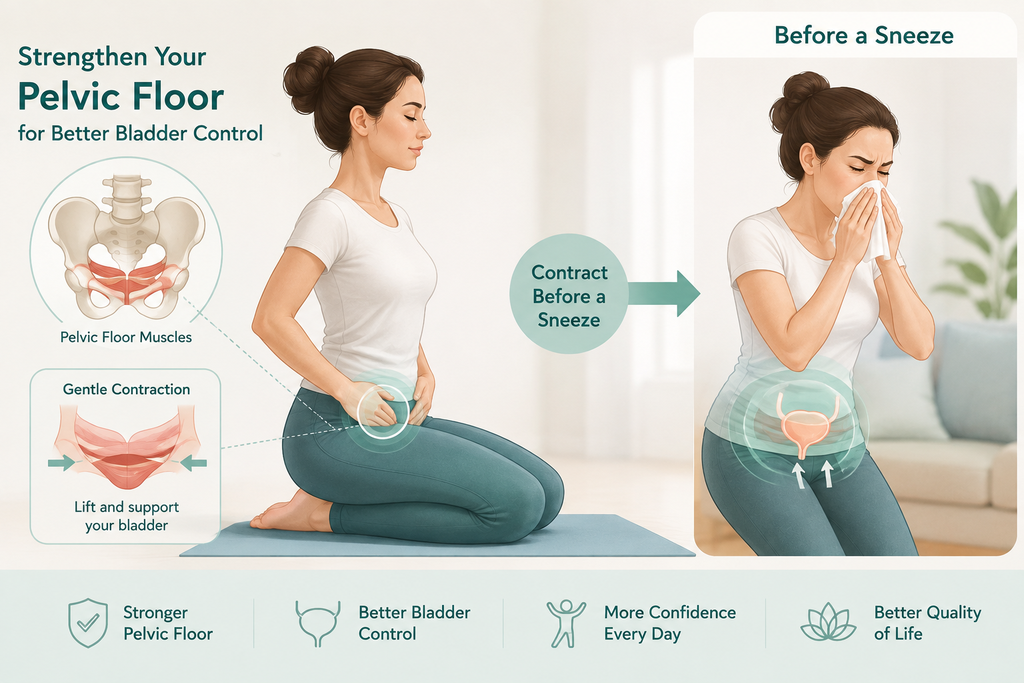
First, prepare your pelvic floor when you feel a sneeze coming. Try to gently contract the pelvic-floor muscles immediately before and during the sneeze rather than waiting until after leakage occurs.
For example, if you feel a sneeze building while standing, pause if possible, gently engage the pelvic floor, and sneeze without deliberately holding your breath for an extended period.
Second, make pelvic-floor muscle training part of your regular routine. NIDDK recommends Kegel exercises to strengthen muscles involved in bladder control and notes that both women and men can benefit. (NIDDK)
What Should You Do Before Sneezing to Prevent Urine Leakage?
Before sneezing, gently tighten your pelvic-floor muscles and maintain normal breathing while the pressure event occurs. This strategy is sometimes described as contracting the pelvic floor before an activity that increases abdominal pressure.
Next, avoid turning the technique into a forceful full-body squeeze. Your goal is controlled pelvic-floor activation rather than aggressively tightening your stomach, thighs, or buttocks.
For example, if coughing repeatedly triggers leakage, you can use the same preparation technique before a cough. NIDDK specifically notes that pelvic-floor exercises can help reduce leakage associated with laughing, coughing, sneezing, and lifting. (NIDDK)
Can Pelvic Floor Exercises Reduce Urine Leakage When Sneezing?
Pelvic-floor muscle training can reduce urine leakage by strengthening muscles that help support the bladder and control urine release. Research summarized by NIDDK found that women receiving pelvic-floor muscle training had fewer leaks per day than women who did not receive training. (NIDDK)
First, consistency matters more than performing hundreds of contractions occasionally. NIDDK recommends working toward 10 to 15 repetitions per exercise session, with exercises practiced in different positions such as lying, sitting, and standing. — Source: National Institute of Diabetes and Digestive and Kidney Diseases, 2026 (NIDDK)
Second, improvement takes time. NIDDK notes that bladder-control improvement may not be noticeable until about 3 to 6 weeks for some people. — Source: National Institute of Diabetes and Digestive and Kidney Diseases, 2026 (NIDDK)
How Do You Perform Pelvic Floor Exercises for Bladder Control?
Pelvic-floor exercises involve tightening and relaxing the muscles that support the bladder, rectum, and pelvic organs. A simple routine can be practiced while lying down, sitting, or standing. (NIDDK)
Try this beginner-friendly sequence:
- Identify the muscles. Imagine you are trying to prevent passing gas while also stopping urine from escaping.
- Gently contract the pelvic floor. Avoid squeezing your stomach, thighs, or buttocks.
- Hold the contraction briefly. Follow the duration recommended by your healthcare professional.
- Relax completely. Allow the muscles to release before the next repetition.
- Repeat consistently. Build the routine into your morning, afternoon, and evening.
Importantly, do not routinely practice Kegels by stopping your urine stream while urinating. NIDDK specifically advises against doing pelvic-floor exercises during urination. (NIDDK)
What If You Are Unsure Whether You Are Using the Right Muscles?
A pelvic-floor physical therapist can help you determine whether you are contracting the correct muscles and develop an individualized exercise plan. Professional guidance can be especially useful when exercises seem ineffective or difficult to perform correctly. (NIDDK)
Moreover, repeatedly squeezing the wrong muscles may not solve the problem. NIDDK warns against tightening the abdomen, thighs, or other muscles during Kegel exercises because incorrect technique can increase pressure on the bladder. (NIDDK)

Can Constipation and Lifestyle Changes Make Urine Leakage Worse?
Constipation and certain lifestyle factors can contribute to bladder-control problems, so addressing them may support better urinary control. NIDDK identifies constipation, some drinking habits, physical inactivity, smoking, and certain medicines among factors associated with urinary incontinence. (NIDDK)
First, manage constipation by eating enough fiber, drinking an appropriate amount of fluid, and staying physically active. For example, whole grains, vegetables, fruits, and other fiber-rich foods can support regular bowel movements. (NIDDK)
Second, review beverages that may affect your bladder. Caffeine, alcohol, and carbonated drinks can contribute to bladder symptoms for some people, although individual tolerance varies. (NIDDK)
Third, avoid intentionally holding urine for long periods as a routine habit. NIDDK recommends going when you need to urinate and allowing enough time to empty the bladder comfortably. (NIDDK)
Can Losing Weight Improve Stress Urinary Incontinence?
If you are overweight or have obesity, achieving a healthy weight may improve urinary incontinence for some people. NIDDK states that weight loss may improve urinary incontinence and that maintaining a healthy weight may help prevent bladder-control problems. (NIDDK)
However, weight should not be presented as the only solution. For example, a person with a healthy weight can still experience stress incontinence after childbirth, pelvic surgery, menopause, or other pelvic-floor changes.
Therefore, focus on overall bladder health rather than weight alone. Pelvic-floor training, appropriate activity, bowel management, and professional assessment may all be relevant.
What Other Treatments Can Help Stress Urinary Incontinence?
Stress urinary incontinence can be treated with conservative approaches, pelvic-floor therapy, devices, medicines in selected circumstances, or procedures depending on the diagnosis and severity. Treatment should be individualized rather than chosen solely from an online symptom description. (NIDDK)
First, pelvic-floor muscle training is a major conservative treatment option. NICE guidance has identified pelvic-floor muscle training as a first-line intervention for stress urinary incontinence. — Source: National Institute for Health and Care Excellence, 2026 (Nice)
Second, a healthcare professional may recommend pelvic-floor physiotherapy when you need help identifying or strengthening the correct muscles. For some women, a pessary may also be considered as part of stress-incontinence management.
Third, selected patients may be offered medicines or procedures after evaluation. The appropriate option depends on the person’s symptoms, health history, anatomy, preferences, and response to conservative treatment.
| Treatment approach | What it may involve | When it may help |
|---|---|---|
| Pelvic-floor training | Repeated controlled pelvic-floor contractions | Common first-line approach for stress leakage |
| Pelvic-floor physiotherapy | Individual assessment and guided exercises | When technique or muscle function is uncertain |
| Lifestyle changes | Bowel, fluid, activity, smoking, and weight management | As supportive bladder-control measures |
| Pessary | Vaginal support device for some women | Selected cases of stress incontinence |
| Medicines | Prescription treatment for selected urinary conditions | Depends on the type of incontinence |
| Procedures or surgery | Medical or surgical interventions | Persistent or significant symptoms after evaluation |
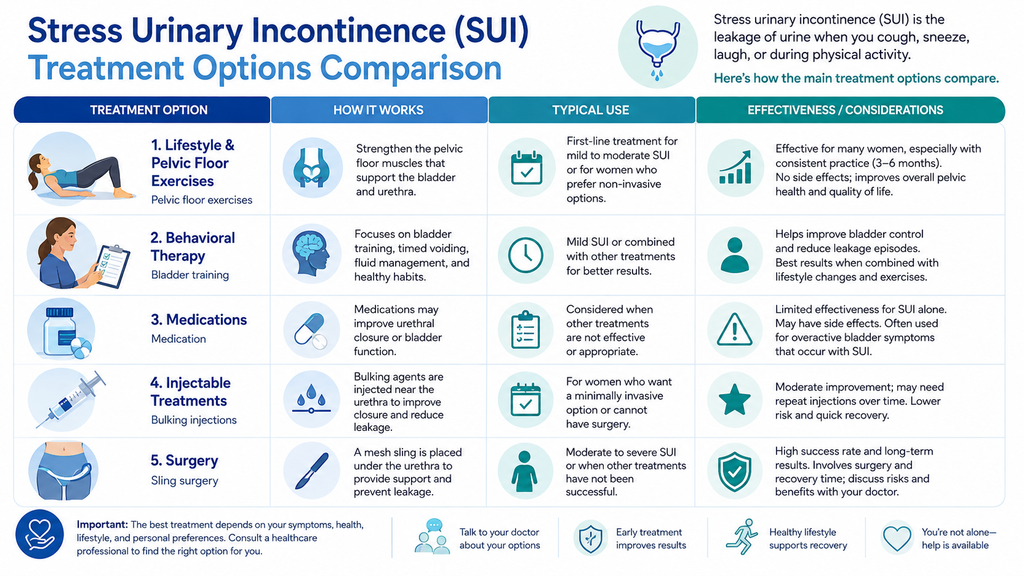
Importantly, not every treatment is appropriate for every type of urinary leakage. A proper diagnosis helps prevent using the wrong treatment for urge, overflow, mixed, or other forms of incontinence. (Mayo Clinic)
What Tools and Practical Habits Can Support Bladder Control?
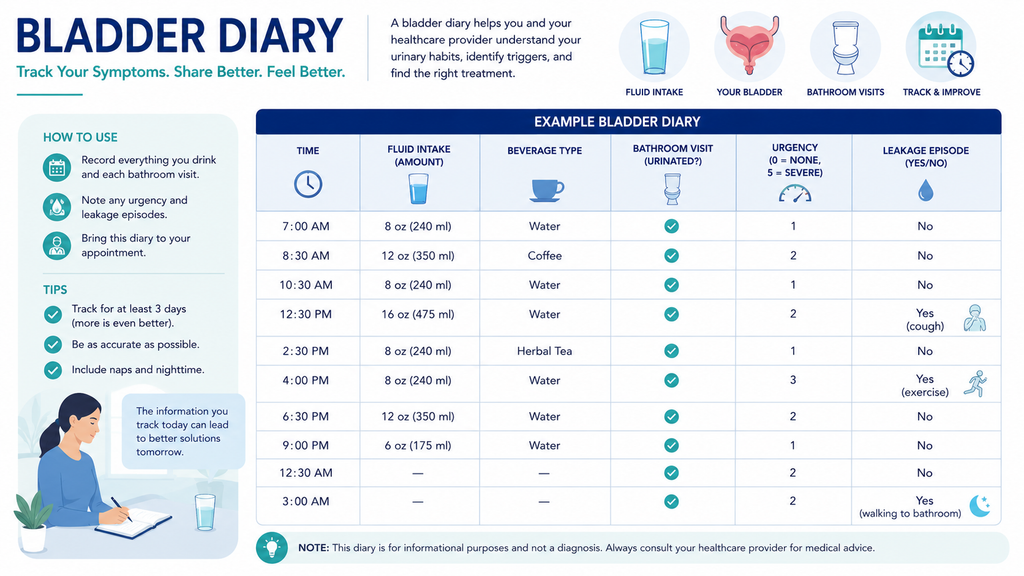
Simple tracking tools and daily habits can help you understand urine leakage patterns and support conversations with healthcare professionals. A bladder diary, exercise reminder, and temporary absorbent protection can make symptom management easier.
First, consider keeping a bladder-symptom diary for several days. Record when you drink, when you urinate, whether you felt an urge, and when leakage occurs. Mayo Clinic describes bladder diaries as part of urinary-incontinence evaluation. (Mayo Clinic)
Second, use a phone reminder or paper checklist to maintain your pelvic-floor exercise routine. For example, a morning, afternoon, and evening reminder can make the routine easier to remember.
Third, absorbent pads or protective underwear can provide temporary confidence during exercise, travel, or other situations where leakage is difficult to predict. These products manage the symptom but do not treat the underlying cause.
Finally, professional pelvic-floor assessment can be more useful than buying multiple unverified bladder-control products. If you are unsure whether you are exercising correctly, a qualified clinician or pelvic-floor physiotherapist can provide individualized guidance.
When Should You See a Doctor for Urine Leakage?
You should see a healthcare professional when urine leakage is persistent, worsening, difficult to manage, or affecting your everyday life. Urinary incontinence can have different causes, and an assessment can determine the most appropriate treatment. (Mayo Clinic)
First, arrange an evaluation if leakage repeatedly interferes with exercise, work, sleep, relationships, travel, or social activities. For example, needing to avoid leaving home because you are afraid of leaking is a strong reason to discuss the problem with a clinician.
Second, seek medical attention for concerning urinary symptoms such as:
- Blood in the urine
- Pain or burning when urinating
- Fever with urinary symptoms
- Severe abdominal, pelvic, side, or back pain
- Difficulty starting or completing urination
- Difficulty emptying the bladder
- Sudden major changes in bladder control
- New neurological symptoms or significant weakness
Mayo Clinic identifies blood in urine, painful urination, difficulty emptying the bladder, fever, and significant urinary changes as reasons for medical assessment. (Mayo Clinic)
Moreover, pregnancy, recent childbirth, pelvic surgery, neurological conditions, recurrent urinary symptoms, or other medical issues may change the appropriate approach. Do not assume every leak is caused by weak pelvic-floor muscles.
What Should You Do Next to Stop Urine Leakage When Sneezing?
First, identify your pattern. Note whether leakage occurs only with sneezing and coughing or also with urgency, frequent urination, nighttime trips, or incomplete bladder emptying.
Second, begin a consistent pelvic-floor routine if a healthcare professional has confirmed that pelvic-floor strengthening is appropriate for you. Start gently and focus on correct muscle activation rather than performing excessive repetitions.
Third, address contributing habits. Work on regular bowel movements, appropriate fluid intake, physical activity, and other factors that may aggravate bladder symptoms.
Fourth, prepare for predictable triggers. If you regularly leak when sneezing, gently engage your pelvic floor before the sneeze and use temporary absorbent protection when appropriate.
Finally, seek professional guidance if leakage continues. A healthcare professional can distinguish stress urinary incontinence from other causes and recommend treatment based on your symptoms and needs. (Mayo Clinic)

Conclusion
Urine leakage when sneezing can often be improved, and recurring leakage does not have to be something you simply accept. Stress urinary incontinence occurs when pressure on the bladder exceeds the ability of the urinary-support system to maintain continence. (Mayo Clinic)
First, pelvic-floor muscle training is one of the most practical evidence-based approaches for improving bladder control. Consistency and correct technique matter, and professional pelvic-floor guidance can help when you are uncertain about the exercises. (NIDDK)
Next, support your progress with healthy bowel habits, appropriate fluid and bathroom habits, regular activity, and strategies for managing sneeze- or cough-related pressure.
Most importantly, remember that urine leakage is common, but it is not something you have to be embarrassed about or automatically accept as normal aging. If symptoms persist, worsen, or come with warning signs such as blood, pain, fever, or difficulty urinating, speak with a healthcare professional.
Written by myserioi.com Editorial Team — Health and wellness content team focused on creating accessible, evidence-informed educational resources.
Reviewed by Medical reviewer not provided in the supplied brief; medical claims should be reviewed by a qualified healthcare professional before publication.
Disclaimer: This article was initially drafted using AI assistance. However, the content has undergone thorough revisions, editing, and fact-checking by human editors and subject matter experts to ensure accuracy.
Medical disclaimer: This article is for general educational purposes and is not a substitute for personalized medical advice, diagnosis, or treatment. If you have concerning, persistent, or worsening urinary symptoms, consult a qualified healthcare professional.
Affiliate Disclosure
Some links on myserioi may be affiliate links. This means that if you click a link and make a purchase, we may receive a small commission at no extra cost to you.
We only recommend products, services, or resources that we believe may be useful to our readers. Affiliate partnerships do not influence our editorial content or recommendations.
Thank you for supporting myserioi.com by using our affiliate links.