

Table of Contents
If you’ve been dealing with an annoying eyelid twitch, you’ve probably wondered whether it is harmless or whether you need to see a doctor. The right choice depends on how long the twitch lasts, how often it occurs, and whether you have vision, eye, facial, or neurological symptoms; in this guide, we’ll explain which eye doctor to see for eye twitching and what to do next.
Key Takeaways
- Eye twitching is an involuntary eyelid movement that is often temporary and harmless.
- Optometrists and ophthalmologists can evaluate persistent or bothersome eye twitching.
- Ophthalmologists are medical eye specialists who can assess eye conditions and determine whether additional medical evaluation is needed.
- Fatigue, stress, caffeine, and eye strain can contribute to common eyelid twitching.
- Persistent twitching, vision changes, eyelid closure, redness, swelling, or facial spasms should be professionally evaluated.
- Sudden vision loss or serious neurological symptoms require urgent medical attention rather than waiting for a routine eye appointment.
- Tracking your symptoms can help an eye-care professional understand possible triggers and decide whether further evaluation is appropriate.
What Is an Eye Twitch?
Eye twitching is an involuntary movement or spasm of the eyelid, and a common form is called eyelid myokymia. It often appears as a small, repetitive movement in one eyelid and may resolve without treatment.
Moreover, myokymia commonly affects the lower eyelid and can feel like a small fluttering or rippling movement. For example, you might notice your lower eyelid moving for several seconds after a poor night’s sleep or during a stressful day.
At the same time, “eye twitching” can describe different types of involuntary movements. Blepharospasm, for example, can cause stronger eyelid spasms that may force the eyes to close, while hemifacial spasm can involve other muscles on one side of the face.
This article is educational and cannot determine the cause of an individual person’s symptoms. A healthcare professional should evaluate persistent, worsening, or unusual eye twitching.
If you’re interested, you can learn more about VisiFlora and its ingredients>>>

Why Does Knowing Which Eye Doctor to See for Eye Twitching Matter?
Knowing which eye doctor to see for eye twitching matters because persistent or unusual twitching can sometimes involve the eye, eyelid, facial muscles, medications, or the nervous system. An appropriate evaluation helps distinguish a common temporary twitch from symptoms that need additional assessment.
First, an eye-care professional can examine the eyelid and surrounding structures while asking about your symptoms, medications, lifestyle, and possible triggers. For example, an eye doctor may ask whether the twitch happens only in one eyelid or whether it has started affecting other parts of your face.
In addition, the correct specialist can determine whether you need further testing or referral. Persistent or atypical eyelid twitching may sometimes require evaluation beyond a routine eye examination.
An optometrist or ophthalmologist can evaluate persistent or bothersome eye twitching and determine whether further medical assessment is needed.
Which Eye Doctor Should You See for Eye Twitching?
An optometrist or ophthalmologist can be an appropriate starting point for persistent or bothersome eye twitching, while an ophthalmologist may be especially useful when symptoms are severe, persistent, or associated with other eye or neurological symptoms.
Should You See an Optometrist or Ophthalmologist for an Eye Twitch?
An optometrist is a trained eye-care professional who examines vision and many eye conditions, while an ophthalmologist is a medical doctor specializing in eye care and eye disease.
| Professional | What they can help with | When they may be appropriate |
|---|---|---|
| Optometrist | Eye examination, vision problems, many common eye conditions | Mild but persistent or bothersome twitching without major warning signs |
| Ophthalmologist | Medical eye evaluation, eye diseases, more complex eye problems | Persistent, severe, unusual, or associated eye symptoms |
| Primary-care clinician | General medical assessment and medication review | Twitching involving broader symptoms or possible medication causes |
| Neurologist | Nervous-system and movement-related conditions | Facial spasms or other neurological symptoms when referral is appropriate |
For example, someone with occasional lower-eyelid fluttering after several nights of poor sleep may start with an optometrist, while someone whose eyelid repeatedly closes involuntarily may benefit from an ophthalmologist’s assessment.
Moreover, an ophthalmologist can help determine whether the symptoms appear to originate primarily from the eye or whether another medical specialist should become involved.
What Causes Persistent Eyelid Twitching?
Persistent eyelid twitching can have several possible causes, including fatigue, stress, caffeine, eye strain, irritation, medications, and certain neurological conditions. The cause cannot be determined from twitching alone.
Can Stress, Fatigue, or Caffeine Cause Eye Twitching?
Stress, fatigue, and excessive caffeine can contribute to common eyelid twitching. For example, a person who sleeps poorly and consumes several caffeinated drinks may notice more frequent eyelid fluttering during the day.
Similarly, eye irritation and strain may contribute to twitching or make existing symptoms more noticeable. Reducing excessive caffeine, getting adequate sleep, and addressing eye irritation may help when these factors are contributing.
how screen time affects your eyes
What Other Causes Can Lead to Persistent Twitching?
Persistent twitching can sometimes occur with conditions such as blepharospasm or hemifacial spasm, although these conditions are different from ordinary eyelid myokymia.
For example, hemifacial spasm typically affects one side of the face and can progress from eyelid twitching to involuntary movements involving other facial muscles.
Similarly, blepharospasm can cause repeated eyelid spasms and, in severe cases, involuntary eye closure. Cleveland Clinic notes that blepharospasm is primarily a neurological condition.
These conditions are uncommon compared with ordinary temporary eyelid twitching, so persistent symptoms should be evaluated rather than self-diagnosed.
When Should You See a Doctor for Eye Twitching?
You should see a healthcare professional when eye twitching persists, becomes frequent or disruptive, affects your vision, or occurs with other concerning symptoms.
When Should Persistent Eye Twitching Be Evaluated?
Persistent eye twitching deserves professional evaluation when it does not settle or begins interfering with normal activities. The NHS advises contacting a primary-care clinician when a twitch lasts more than two weeks, occurs in more than one place, or is accompanied by weakness or stiffness.
Additionally, an eye evaluation is appropriate when twitching affects your vision or becomes particularly bothersome. Cleveland Clinic recommends medical evaluation when eye twitching does not resolve or begins interfering with daily life.
Consider arranging an appointment if you notice:
- Twitching that keeps returning or does not settle.
- Twitching that interferes with work, reading, driving, or daily activities.
- Eyelid spasms that force the eye closed.
- Vision changes or double vision.
- Persistent redness, swelling, irritation, or light sensitivity.
- Twitching that spreads to other parts of the face.
- Weakness or unusual neurological symptoms.
If you’re interested, you can learn more about VisiFlora and its ingredients>>>

When Does Eye Twitching Require Urgent Medical Attention?
Eye twitching requires urgent medical attention when it occurs with sudden vision loss or serious new neurological symptoms.
For example, sudden vision loss should not be monitored at home while waiting for a routine eye appointment. Likewise, new weakness, significant facial drooping, confusion, difficulty speaking, or other sudden neurological symptoms require urgent medical assessment.
Moreover, serious causes of eyelid or facial spasms are uncommon, but associated neurological symptoms change the level of concern. Sudden vision loss or new serious neurological symptoms require urgent medical attention rather than waiting for a routine eye appointment.
when vision changes need medical attention
What Happens During an Eye-Twitch Examination?
An eye-twitch examination usually includes a medical history, discussion of possible triggers and medications, and an examination of the eyes and surrounding structures. The clinician may also assess facial or neurological symptoms when appropriate.
What Questions Will the Eye Doctor Ask?
First, your clinician may ask when the twitch started, how often it occurs, how long individual episodes last, and whether one or both eyes are affected.
Second, the clinician may ask about sleep, stress, caffeine, medications, eye irritation, vision changes, and other symptoms. For example, keeping a short symptom diary can make it easier to describe whether the twitch happens after screen use, during stressful periods, or after consuming caffeine.
Can an Eye Doctor Diagnose the Cause of Persistent Eye Twitching?
An eye-care professional can often identify the pattern of eyelid twitching through history and examination, while persistent or atypical cases may require additional evaluation.
EyeWiki notes that eyelid myokymia is generally diagnosed clinically, but persistent symptoms, spread beyond the eyelid, or neurological signs can warrant further investigation.
In selected persistent or atypical cases, clinicians may consider additional tests such as imaging or referral to another specialist. The need for testing depends on the symptoms and examination findings rather than the presence of a twitch alone.
An eye-twitch evaluation may include a medical history, review of possible triggers and medications, and an examination of the eyes and surrounding structures.
What Can You Do at Home While Waiting for an Eye Appointment?
You can often reduce common eye-twitch triggers by getting enough sleep, limiting excessive caffeine, managing stress, and reducing eye strain while waiting for an appointment. These steps are supportive measures and do not replace medical evaluation when warning signs are present.
Practical Steps to Try
First, prioritize regular sleep because fatigue and sleep deprivation are common contributors to eyelid twitching. For example, maintaining a consistent sleep schedule may be more useful than simply trying to sleep longer on one isolated night.
Second, review your caffeine intake and reduce excessive amounts if you notice that caffeine appears to trigger or worsen the twitch. Do not stop prescribed medicines on your own, even if you suspect a medication may be contributing.
Third, manage screen-related eye strain by taking regular breaks and paying attention to dryness or irritation.
how to reduce eye strain from screens
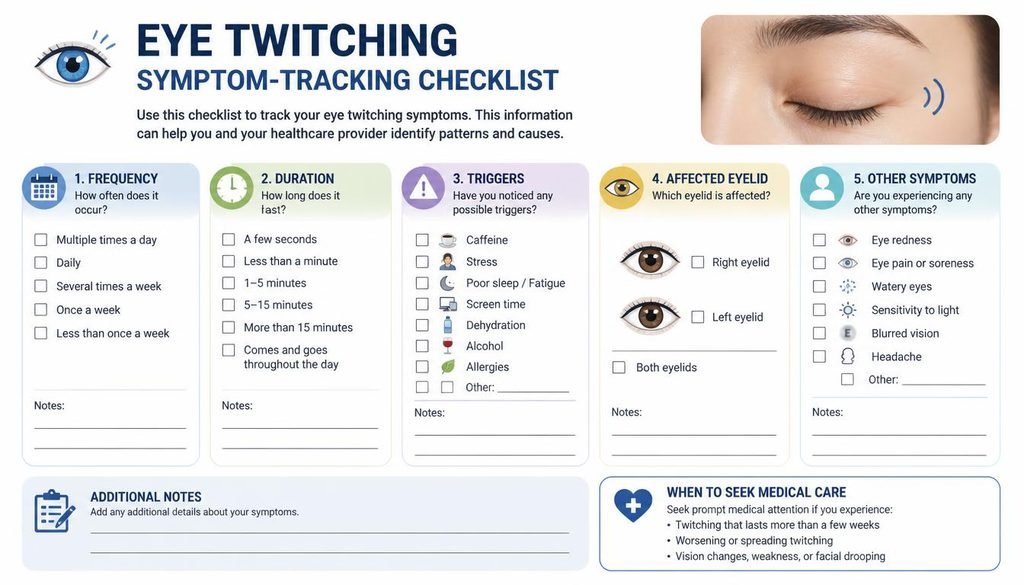
What Should You Track Before Your Appointment?
Keep a simple record of:
- Start date: When the twitch began.
- Frequency: How often it happens.
- Duration: How long each episode lasts.
- Location: Upper eyelid, lower eyelid, or other facial areas.
- Triggers: Sleep loss, stress, caffeine, screens, or irritation.
- Associated symptoms: Vision changes, redness, swelling, pain, weakness, or facial spasms.
What Are the Next Steps If Eye Twitching Keeps Happening?
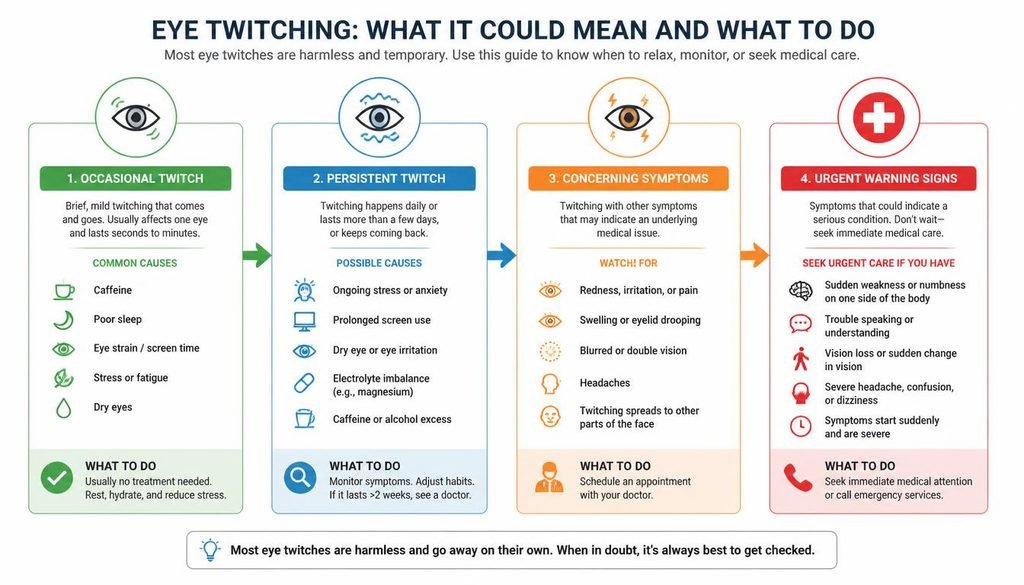
The next step depends on how persistent the twitch is and whether other symptoms are present.
A Simple Decision Path
- Occasional and mild: Monitor common triggers such as fatigue, stress, caffeine, and eye strain.
- Persistent or recurrent: Arrange an appointment with an optometrist or ophthalmologist.
- Vision or significant eye symptoms: Seek prompt professional evaluation.
- Facial or neurological symptoms: Contact a healthcare professional promptly because additional evaluation may be needed.
- Sudden vision loss or serious neurological symptoms: Seek urgent or emergency medical attention.
This approach avoids two common mistakes: ignoring symptoms that deserve evaluation and assuming that every eyelid twitch represents a serious disease.
For example, a mild lower-eyelid flutter after several nights of poor sleep is different from repeated eyelid closure accompanied by facial spasms or new vision changes.
ways to protect your eye health
Practical Eye-Twitch Preparation: What to Bring to Your Appointment
Preparing a short symptom summary can make an eye-twitch appointment more useful because the clinician can quickly understand the pattern and associated symptoms.
Before your visit, write down your medications, caffeine intake, sleep pattern, symptom duration, affected eyelid, frequency, and any changes in vision or facial movement.
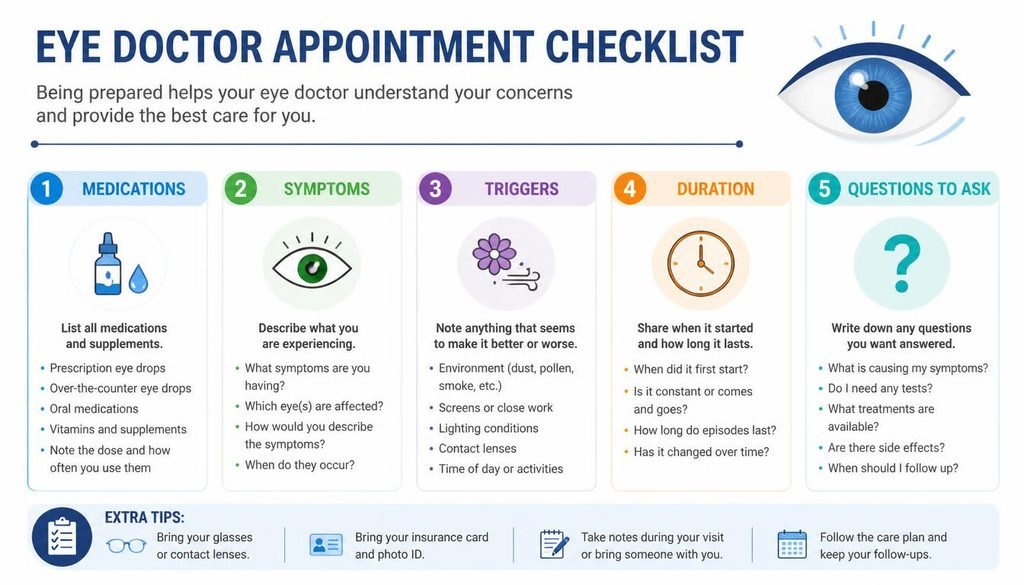
You can also record the time of day when the twitch occurs and whether it appears after prolonged screen use or stressful situations. A short video of the twitch may also be useful if the movement is intermittent and does not occur during the examination.
If you’re interested, you can learn more about VisiFlora and its ingredients>>>

Conclusion
Eye twitching is an involuntary eyelid movement that is often temporary and associated with factors such as fatigue, stress, caffeine, or eye irritation. Most occasional twitches are not a reason for alarm, but persistent, worsening, or unusual symptoms deserve professional assessment.
An optometrist or ophthalmologist can be an appropriate starting point, while an ophthalmologist may be particularly useful when symptoms are severe, persistent, or accompanied by significant eye symptoms. A primary-care clinician or neurologist may become involved when the symptoms suggest a broader medical or neurological issue.
Most importantly, do not ignore sudden vision loss or serious new neurological symptoms. Those symptoms require urgent medical attention rather than waiting for a routine eye appointment.
If your eye twitch is mild and occasional, tracking potential triggers may be reasonable. If it keeps happening, interferes with your daily life, or occurs with other unusual symptoms, arranging a professional evaluation is the safest next step.
Written by myserioi.com Editorial Team — Health & Fitness content team focused on accessible, evidence-informed health education.
Reviewed by Eye-care professional — Medical review is recommended before publication to verify specialist-specific guidance and clinical accuracy.
Disclaimer: This article was initially drafted using AI assistance. However, the content should undergo thorough human editing, medical fact-checking, and review by a qualified eye-care professional before publication. This article is for educational purposes only and does not diagnose or treat individual medical conditions.
Affiliate Disclosure: Some links in this article are affiliate links. If you purchase through these links, we may earn a commission at no extra cost to you. We only recommend products or services we believe may be useful to our readers.