
Table of Contents
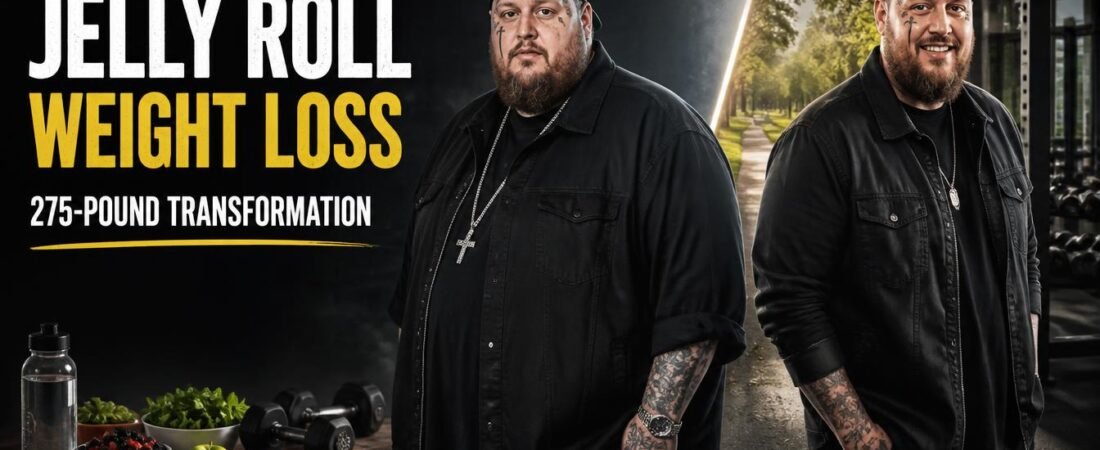
If you have seen Jelly Roll’s dramatic transformation, you already know that his weight loss has attracted enormous attention. What is less clear is which parts of the story are documented and which claims come from speculation, so this guide separates the verified details from the rumors and explains the practical lessons you can safely apply.
Key Takeaways
- Jelly Roll’s weight-loss journey describes his publicly documented transformation from a reported peak of 540 pounds to about 265 pounds.
- Jelly Roll’s reported approach included changes to nutrition, physical activity, mindset, therapy, and professional support rather than one simple “secret diet.”
- Jelly Roll’s weight loss totaled about 275 pounds based on the figures reported by Men’s Health in January 2026.
- Jelly Roll’s medication story is more complicated than social-media claims suggest because he has discussed testosterone replacement therapy while denying that Ozempic caused his transformation.
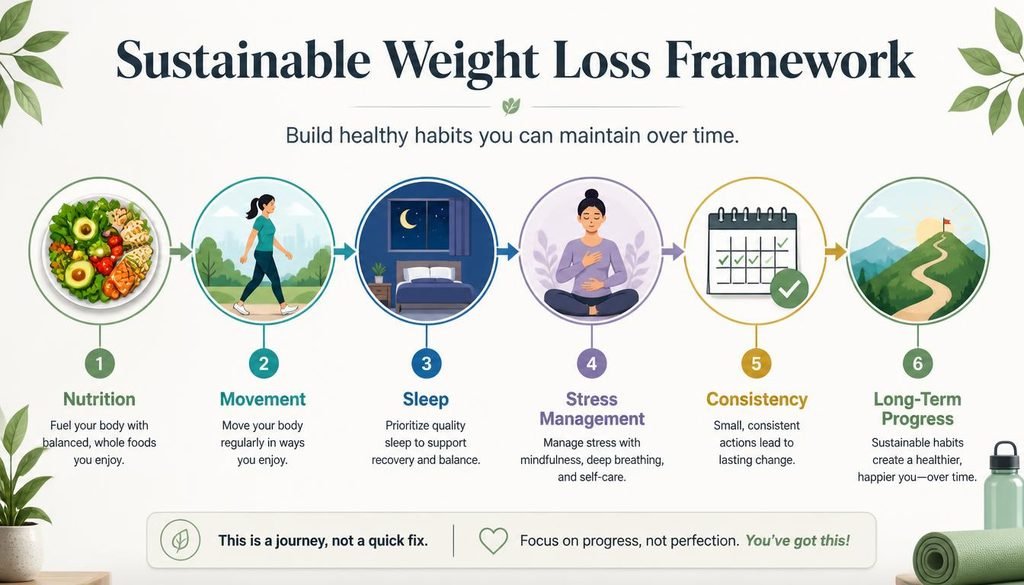
- Sustainable weight loss generally depends on maintainable nutrition, physical activity, sleep, stress management, and long-term adherence rather than extreme restriction.
- Celebrity timelines cannot predict how quickly another person will lose weight because body weight is affected by health, medications, activity, diet, genetics, age, and other factors.
- The most useful lesson is to adapt healthy principles to your own circumstances instead of attempting to duplicate Jelly Roll’s exact routine.
What Is Jelly Roll’s Weight-Loss Journey?
Jelly Roll’s weight-loss journey is the publicly documented story of his efforts to improve his health, fitness, and body weight through lifestyle changes and other reported interventions. The country-rap artist, whose real name is Jason DeFord, has spoken openly about his previous struggles with obesity, food addiction, physical limitations, and his desire to become healthier.
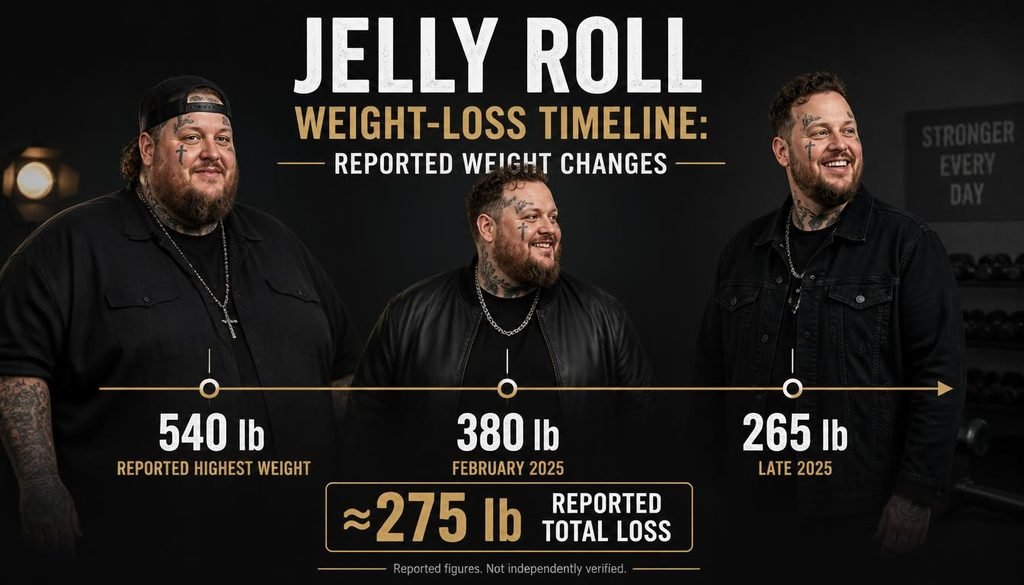
First, Men’s Health reported that Jelly Roll weighed approximately 540 pounds at his heaviest and later reached about 265 pounds, representing a reported loss of roughly 275 pounds.
At the same time, his story was not simply about reaching a number on a scale. Jelly Roll described wanting to improve his overall health and change his relationship with food, while also pursuing a major personal goal: appearing on the cover of Men’s Health.
Jelly Roll’s transformation is best understood as a combination of behavioral, physical, and health-related changes rather than a single weight-loss trick.
Why Does Jelly Roll’s Weight Loss Matter?
Jelly Roll’s weight loss matters because his story shows how a celebrity transformation can generate motivation while also demonstrating why individual results should not be copied literally. His reported journey involved professional support, lifestyle changes, mindset work, and health-related treatment.
First, celebrity transformations attract attention because they provide a visible example of change. For example, Jelly Roll went from describing severe physical limitations at his highest weight to performing demanding physical activities during his transformation. Men’s Health documented his progression from approximately 380 pounds in early 2025 to 265 pounds later that year.
Moreover, the story illustrates an important distinction: motivation can come from another person, but a weight-loss plan must fit your own body and circumstances.
The CDC says people who lose weight gradually, at about 1 to 2 pounds per week, are more likely to keep it off than people who lose weight faster — Source: CDC, 2025.
How Did Jelly Roll Lose Weight?
Jelly Roll reportedly lost weight through a combination of improved nutrition, increased physical activity, mindset changes, professional support, and treatment of underlying health concerns. There is no credible evidence that one single “Jelly Roll diet” explains his entire transformation.
What Lifestyle Changes Helped Jelly Roll Lose Weight?
First, Jelly Roll has described changing his relationship with food as an important part of his transformation. Men’s Health reported that he recognized problematic eating patterns and worked through the emotional side of his relationship with food, with therapy playing an important role.
Second, he assembled professional support around his health goals. Reports describe working with a chef and nutritionist, including Ian Larios, as well as receiving health-related support while traveling for work.
Third, physical activity became another major component. His reported activities included walking, workouts, basketball, and other forms of movement as his fitness improved. Men’s Health documented him participating in physically demanding activities after previously struggling to walk long distances.
The strongest general lesson is consistency: sustainable changes repeated over time can matter more than an extreme short-term routine.
How Long Did Jelly Roll’s Weight-Loss Transformation Take?
Jelly Roll’s major transformation developed over several years, with particularly substantial progress documented between 2024 and late 2025. Men’s Health described his progression from a peak of approximately 540 pounds to 265 pounds.
At one stage, he reportedly lost approximately 9 to 15 pounds per month, although that rate reflects his individual circumstances and should not be treated as a target for everyone.
For comparison, public-health guidance generally favors slower, sustainable weight loss rather than trying to reproduce unusually rapid celebrity transformations. The CDC recommends approximately 1 to 2 pounds per week as a gradual rate — Source: CDC, 2025.
How Much Weight Did Jelly Roll Lose?
Jelly Roll reportedly lost approximately 275 pounds, dropping from about 540 pounds at his heaviest to approximately 265 pounds. These figures were reported by Men’s Health in January 2026.
| Reported milestone | Approximate weight |
|---|---|
| Highest reported weight | 540 lb |
| February 2025 | 380 lb |
| Late 2025 | 265 lb |
| Reported total loss | 275 lb |
First, these numbers should be treated as reported figures from Jelly Roll and the publications documenting his journey, not as a recommendation for how much another person should lose. Men’s Health reported that he had already dropped from 540 to 380 pounds by February 2025 and later reached approximately 265 pounds.
Second, online posts sometimes use different numbers because celebrity weight can change over time. Therefore, the safest approach is to use the figures documented by reliable sources rather than repeating unsupported social-media estimates.
Jelly Roll’s reported 275-pound loss is a description of his personal transformation, not a benchmark that other people should attempt to match.
What Diet Did Jelly Roll Follow for Weight Loss?
Jelly Roll did not publicly establish one universally prescribed “Jelly Roll diet”; instead, reports describe a broader shift toward structured nutrition and healthier eating. His chef and nutritionist helped organize meals, while Jelly Roll has discussed changing his relationship with food.
What Nutrition Principles Can You Learn From His Story?
First, a practical weight-management diet generally focuses on overall calorie intake and food quality rather than one magical ingredient. NIDDK explains that consuming fewer calories than the body uses can contribute to weight loss, while food choices should still provide needed nutrients.
For example, a balanced meal might contain a protein source, vegetables, fruit or whole grains, and an appropriate portion of healthy fats.
Second, protein and fiber can make meals more satisfying while helping you build a nutritionally balanced eating pattern. NIDDK recommends meals containing vegetables, fruits, protein foods, and whole grains.
Is There a Secret Jelly Roll Weight-Loss Food?
No verified evidence shows that one particular food caused Jelly Roll’s transformation. Online claims about celebrity “secret foods” should be treated cautiously unless they come directly from a reliable interview or documented source.
Moreover, sustainable nutrition does not require eliminating every enjoyable food. NIDDK notes that occasional treats can fit within a healthy eating pattern when portions and overall dietary quality are managed.
What Exercises Did Jelly Roll Do to Lose Weight?
Jelly Roll reportedly used increasing physical activity as an important part of his transformation, including walking, workouts, basketball, and other physical activities. His documented journey shows how movement became easier as his fitness improved.
What Was Jelly Roll’s Workout Routine?
First, there is no single complete workout routine that should be treated as an official program for everyone. His activities changed as his physical capabilities improved, and his professional schedule also influenced what he could do.
Second, beginners can take a simpler approach. Starting with manageable walking and gradually increasing activity can be more realistic than immediately copying an advanced celebrity workout.
NIDDK says successful weight-management programs commonly include at least 150 minutes per week of moderate-intensity aerobic activity, such as brisk walking or cycling — Source: NIDDK, current guidance.
For example, someone starting from a sedentary lifestyle might begin with short walks and gradually build duration.
Did Jelly Roll Use a Weight-Loss Medication?
Jelly Roll’s medication history should be separated into verified statements because different treatments and rumors have circulated online. He has discussed testosterone replacement therapy, while recent reporting also documents his denial that Ozempic was responsible for his weight loss.
First, Men’s Health reported that Jelly Roll had very low testosterone and subsequently began testosterone replacement therapy. His reported testosterone level was 57 ng/dL, compared with the publication’s cited adult male reference range of approximately 300–900 ng/dL.
Second, testosterone replacement therapy is not the same thing as a standard weight-loss medication. Healthline similarly reported that TRT is not a weight-loss drug and should only be considered when medically appropriate.
Third, recent reporting says Jelly Roll denied using Ozempic to achieve his transformation and attributed his results primarily to diet and exercise.
Jelly Roll’s reported medical treatment should not be copied without medical evaluation, testing, and professional supervision.
Is Jelly Roll’s Weight-Loss Routine Safe for Everyone?
Jelly Roll’s weight-loss routine is not automatically safe or appropriate for everyone because individual health conditions, medications, nutritional needs, fitness levels, and medical history differ.
First, a celebrity may have access to professionals, testing, chefs, trainers, and medical care that an average reader does not have. For example, Jelly Roll’s documented support team included nutrition and health professionals during his transformation.
Second, NIDDK recommends speaking with a healthcare professional about safe and effective weight-management options, particularly when overweight or obesity is affecting health.
Anyone taking medication, managing a medical condition, considering hormone therapy, or planning substantial weight loss should discuss the plan with an appropriately qualified healthcare professional.
What Can You Learn From Jelly Roll’s Weight-Loss Journey?
The most useful lesson from a celebrity weight-loss transformation is not to copy the person’s exact routine, but to identify sustainable habits that can be safely adapted to individual circumstances.
1. Focus on Health, Not Only the Scale
First, Jelly Roll has described shifting his mindset toward becoming healthier rather than simply chasing a number. Men’s Health reported that this change in perspective was an important part of his journey.
For example, your goal might be walking comfortably, improving fitness, sleeping better, or reducing health risks rather than pursuing a specific celebrity’s weight.
2. Make Nutrition Sustainable
Second, build meals you can realistically maintain. A balanced approach can include vegetables, fruits, protein sources, whole grains, and appropriate portions.
You can learn more about [Internal link: “calorie deficit for weight loss” → suggested target page/topic: calorie-deficit explainer] because calorie balance remains an important part of weight management.
3. Build Movement Gradually
Third, choose physical activities that you can repeat consistently. Walking, cycling, resistance training, swimming, and recreational sports can all contribute to an active lifestyle.
4. Treat Setbacks as Part of the Process
Fourth, weight loss is rarely perfectly linear. Jelly Roll himself has discussed setbacks during his journey, including an injury that affected his progress.
A temporary setback does not mean the entire plan has failed.
5. Get Professional Support When Needed
Finally, professional guidance can make a major difference when weight management involves obesity, medication, medical conditions, eating difficulties, or substantial planned weight loss. NIDDK recommends structured programs that combine nutrition, activity, guidance, support, and weight-maintenance strategies.
What Practical Tools Can You Use for Your Own Weight-Loss Plan?
Practical weight-loss tools are simple systems that help you monitor nutrition, activity, sleep, and consistency without turning the process into an obsession.
First, you can use a food diary or nutrition-tracking app to understand portions and calorie intake. Free options such as a spreadsheet or basic notes app can work just as well for someone who prefers simplicity.
Second, a step counter or smartphone can help you monitor daily movement. You do not need the same equipment Jelly Roll used to start becoming more active.
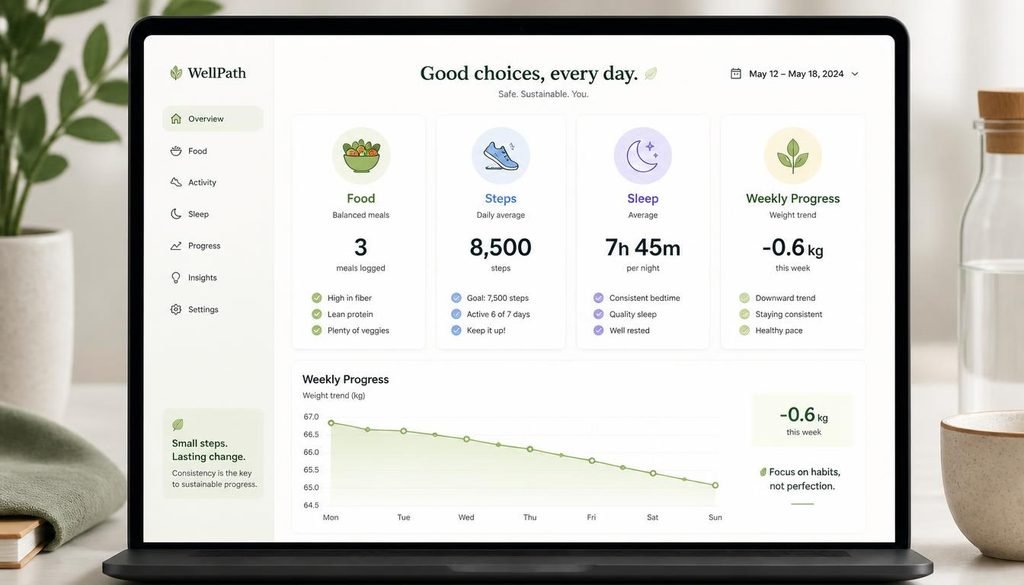
Third, use a weekly check-in instead of judging yourself based on every daily fluctuation. Weight naturally changes because of hydration, food volume, sodium, digestion, and other factors.
A useful personal dashboard can include:
- Weekly weight trend
- Daily or weekly activity
- Protein-rich meals
- Fruit and vegetable intake
- Sleep duration
- Water intake
- Energy and hunger levels
- Progress toward behavior-based goals
How Can You Lose Weight Safely and Sustainably?
Safe and sustainable weight loss involves creating maintainable changes to nutrition and physical activity rather than relying on short-term dieting or extreme restriction.
First, start with a realistic goal. NIDDK notes that an initial goal of 5% to 10% of starting body weight over six months is commonly recommended — Source: NIDDK, current guidance.
For example, someone weighing 200 pounds might initially aim to lose 10 to 20 pounds over six months rather than attempting a dramatic transformation within a few weeks.
Second, combine several manageable habits:
- Build balanced meals around nutrient-dense foods.
- Monitor portions when appropriate.
- Increase physical activity gradually.
- Prioritize adequate sleep.
- Manage stress and emotional eating triggers.
- Track progress over time.
- Adjust the plan when circumstances change.
The CDC specifically identifies healthy eating, regular physical activity, sufficient sleep, and stress management as components of a healthy weight-management lifestyle — Source: CDC, 2025.
What Should You Do Next for Healthy Weight Loss?
The best next step is to choose two or three sustainable habits that you can realistically maintain for the next month.
First, avoid trying to reproduce Jelly Roll’s 275-pound transformation. His body, medical history, professional support, lifestyle, and timeline are different from yours.
Second, create a simple starting plan. For example, you might walk for 20 to 30 minutes several days a week, add more protein and vegetables to meals, reduce excess liquid calories, and establish a consistent sleep schedule.
Third, measure progress using more than body weight. Better stamina, improved mobility, healthier eating patterns, and greater consistency can all represent meaningful progress.
Finally, seek professional guidance if you have a medical condition, take medications that affect weight, are considering prescription weight-loss treatment or hormone therapy, or need to lose a substantial amount of weight.
Conclusion
Jelly Roll’s weight-loss journey is a remarkable personal transformation, with Men’s Health reporting a change from approximately 540 pounds at his heaviest to about 265 pounds, or roughly 275 pounds of weight loss.
More importantly, his story demonstrates that major transformations can involve nutrition, physical activity, mindset, professional support, and long-term consistency rather than one secret diet.
Celebrity weight-loss results cannot be used to predict how quickly another person will lose weight because individual results depend on factors such as calorie intake, activity, health status, medications, and adherence.
Jelly Roll’s reported habits should be separated from online speculation, because social-media claims about celebrity diets, supplements, medications, and exact weight-loss figures are not automatically verified facts.
Ultimately, you do not need Jelly Roll’s exact diet, workout routine, body, or timeline to make progress. Build a healthier routine that fits your own life, make changes you can sustain, and measure success by the habits and health improvements you can maintain.
Written by myserioi.com Editorial Team — Health and wellness content team focused on evidence-conscious, reader-friendly health education.
Reviewed by Qualified healthcare professional — Medical review recommended before publication for health and weight-management claims.
Disclaimer: This article was initially drafted using AI assistance. However, the content has undergone thorough revisions, editing, and fact-checking by human editors and subject matter experts to ensure accuracy. This article is for educational purposes only and does not provide individualized medical advice.
Affiliate Disclosure: This post may contain affiliate links. If you purchase a product through one of these links, we may earn a small commission at no additional cost to you. We only recommend products that we believe may be useful to our readers. Our recommendations are not influenced by affiliate commissions.