

Table of Contents
You’ve probably already searched online for straightforward answers about sex, relationships, protection, or sexual health, but reliable information can be difficult to separate from myths. In this USA sex guide, you’ll learn the essentials of consent, communication, safer sex, STI prevention, contraception, healthcare, and trusted U.S. resources.
Key Takeaways
- Sexual health includes physical well-being, emotional well-being, relationships, consent, contraception, and STI prevention.
- Sexual consent requires clear, voluntary, ongoing agreement and can be withdrawn at any time.
- Safer sex practices can reduce the risk of sexually transmitted infections and unintended pregnancy.
- Contraception includes several methods with different effectiveness levels, benefits, and considerations.
- STI testing helps people identify infections and make informed healthcare decisions.
- Healthy communication helps partners discuss boundaries, protection, testing, and contraception.
- U.S. health resources can provide information, testing, counseling, and professional medical care.
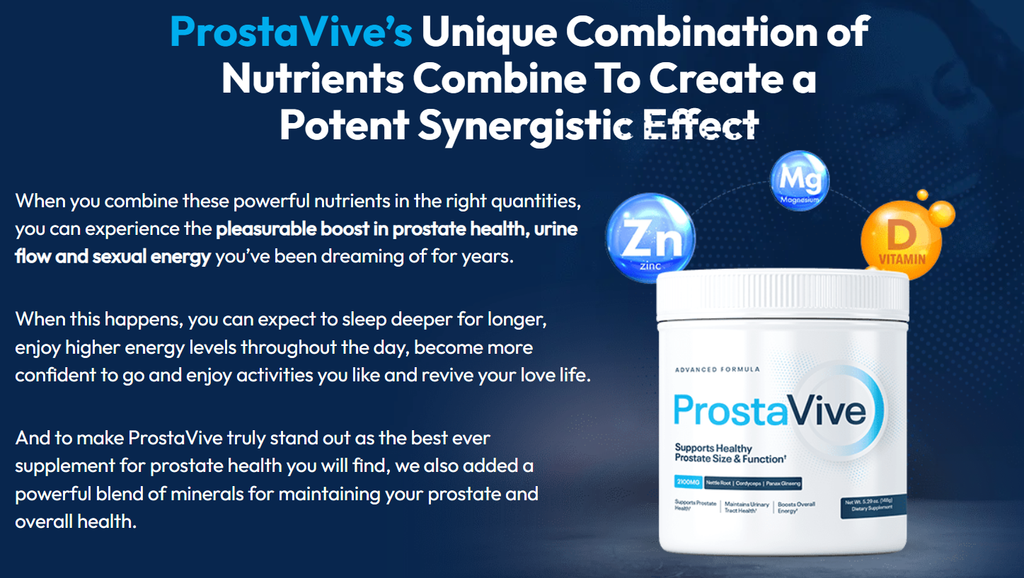
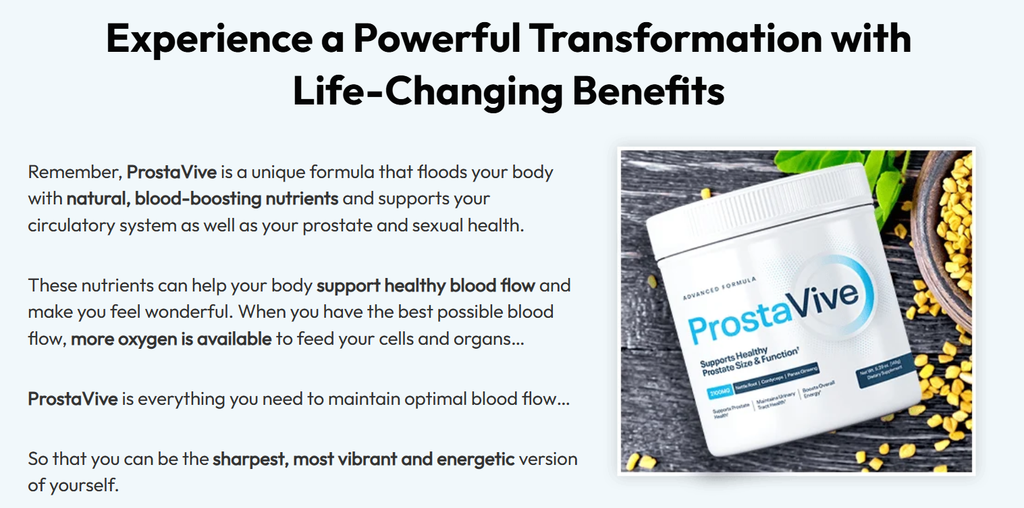
Men’s Prostate Wellness: If you’re also interested in supporting men’s prostate wellness, you can explore ProstaVive – Powerhouse Prostate. Review the product information and consult a healthcare professional for medical concerns.
What Is a USA Sex Guide and What Does It Cover?
A USA sex guide is an educational resource about sexual health, consent, relationships, contraception, STI prevention, and access to healthcare in the United States. For example, a beginner may use such a guide to understand how consent works, what condoms protect against, and when STI testing may be appropriate.
Moreover, sexual health is a broad area of health that includes physical well-being, emotional well-being, relationships, consent, contraception, and prevention of sexually transmitted infections. A useful guide should therefore focus on health and informed decision-making rather than explicit sexual techniques.
In addition, sexual-health information should be based on trustworthy medical sources. For more details, see your sexual health basics
What Topics Should a USA Sexual Health Guide Include?
A comprehensive USA sexual health guide should cover:
- Consent and personal boundaries
- Healthy relationship communication
- Condoms and other barrier methods
- STI prevention and testing
- Birth control and pregnancy prevention
- Sexual-health symptoms
- Healthcare and confidential services
- Reliable U.S. sexual-health resources
As such, readers can use the information to prepare for conversations with partners and healthcare professionals rather than attempting to diagnose themselves online.
Why Is Sexual Health Education Important for Adults?
Sexual health education helps adults make informed decisions about relationships, protection, testing, contraception, and healthcare. For example, understanding that some STIs may have no symptoms can encourage someone to discuss appropriate testing with a healthcare professional.
Furthermore, the CDC reported more than 2.2 million reported cases of chlamydia, gonorrhea, and syphilis in the United States in 2024, although the combined total declined 9% from 2023. — Source: [CDC, 2025]
At the same time, sexual-health education is not only about preventing infections. Good information can also support respectful relationships, clearer communication, informed contraception choices, and timely medical care.
In addition, reliable information helps reduce confusion caused by unsupported online claims. The CDC recommends discussing STI testing with a healthcare provider because testing needs can depend on factors such as age, sexual history, practices, location, and symptoms.
healthy relationship communication
What Does Sexual Consent Mean?
Sexual consent is voluntary agreement between people that can be changed or withdrawn at any time. For example, agreeing to one activity does not automatically mean agreeing to another activity.
Moreover, consent should be freely given, informed, specific, and ongoing. Pressure, manipulation, threats, or an inability to make a voluntary decision can undermine meaningful consent.
How Can Partners Communicate About Sexual Boundaries?
Healthy sexual communication means openly discussing boundaries, preferences, protection, and the ability to stop. For example, partners can ask, “Are you comfortable with this?” and respect the answer without pressure.
In addition, either person can change their mind. A healthy relationship makes it acceptable to say “no,” “stop,” or “I don’t want to continue.”
For more relationship guidance, see how consent works and healthy relationship tips
What Are the Most Common Ways to Reduce STI Risk?
Safer sex involves practices that reduce the risk of sexually transmitted infections and unintended pregnancy. For example, using condoms correctly and consistently can reduce exposure to several STIs, although condoms do not eliminate every type of transmission risk.
Furthermore, the CDC recommends several prevention strategies, including condoms, appropriate vaccination, STI testing, reducing exposure to multiple partners, and mutually monogamous relationships when both partners have been tested and do not have an STI.
How Do Condoms Help Prevent STIs?
Condoms provide important protection against HIV and certain other STIs, particularly infections transmitted through bodily fluids. For example, CDC guidance notes that condoms are effective against HIV and certain infections such as gonorrhea and chlamydia, while offering less protection against infections spread through uncovered skin.
In addition, condoms should be used correctly from beginning to end of sexual activity. People with latex allergies can discuss non-latex alternatives with a healthcare professional.
When Should Adults Get Tested for STIs?
STI testing helps people identify infections and make informed decisions about treatment and sexual health. For example, someone without symptoms may still need testing because many STIs can occur without obvious signs.
Moreover, CDC guidance states that everyone ages 13 to 64 should be tested for HIV at least once, while additional testing depends on individual risk factors and circumstances. — Source: [CDC, 2026]
Testing may be especially important after a new sexual partner, possible exposure, symptoms, or when a healthcare professional recommends screening.
For Men’s Prostate Wellness
Men researching prostate-focused wellness products may want to learn more about ProstaVive – Powerhouse Prostate. Always check the ingredients and product information before purchasing.
What Birth Control Options Are Available in the USA?
Birth control includes methods used to prevent pregnancy, and different methods have different effectiveness levels, advantages, and limitations. For example, options include IUDs, implants, pills, injections, patches, rings, condoms, fertility-awareness methods, and permanent contraception.
Moreover, no single birth-control method is best for everyone. Personal preferences, health considerations, effectiveness, convenience, cost, and pregnancy plans can all influence the appropriate choice.
Which Contraception Methods Are Most Effective?
Long-acting reversible contraception and permanent contraception generally have very low pregnancy rates with typical use. HHS data lists a 0.05% first-year unintended-pregnancy rate for implants and 0.2% for hormonal IUDs in its effectiveness table. — Source: [HHS Office of Population Affairs, 2026]
| Method | Example | First-year typical-use pregnancy rate |
|---|---|---|
| Implant | Hormonal implant | 0.05% |
| Hormonal IUD | LNG IUD | 0.2% |
| Copper IUD | Copper T IUD | 0.8% |
| Injection | Injectable contraception | 6% |
| Pill | Birth-control pill | 9% |
| External condom | Male/external condom | 18% |
Source: HHS Office of Population Affairs contraceptive effectiveness information.
In addition, condoms have an important role because contraception and STI prevention are not the same thing. HHS specifically notes that condoms should be used to reduce STI risk.
How Can People Reduce the Risk of Unintended Pregnancy?
People can reduce unintended-pregnancy risk by choosing an appropriate contraceptive method and using it correctly and consistently. For example, someone using a daily pill can improve effectiveness by taking it as directed rather than frequently missing doses.
Furthermore, emergency contraception can substantially reduce pregnancy risk after unprotected intercourse, and a healthcare professional can explain which options are appropriate and how quickly they should be used.
When Should Someone See a Healthcare Professional About a Sexual-Health Concern?
A person should seek professional medical advice for concerning symptoms, significant pain, possible STI exposure, unusual bleeding or discharge, sores, or other persistent sexual-health problems. For example, unexplained genital symptoms after a new sexual exposure are a reason to contact a healthcare professional rather than relying on an online diagnosis.
In addition, many STIs have no symptoms, so feeling healthy does not always confirm that an infection is absent. Planned Parenthood notes that testing is the reliable way to determine whether someone has an STI.
Moreover, healthcare professionals can help determine which tests, treatments, vaccines, or contraceptive options may be appropriate for an individual’s circumstances.
Where Can Adults Find Reliable Sexual-Health Resources in the USA?
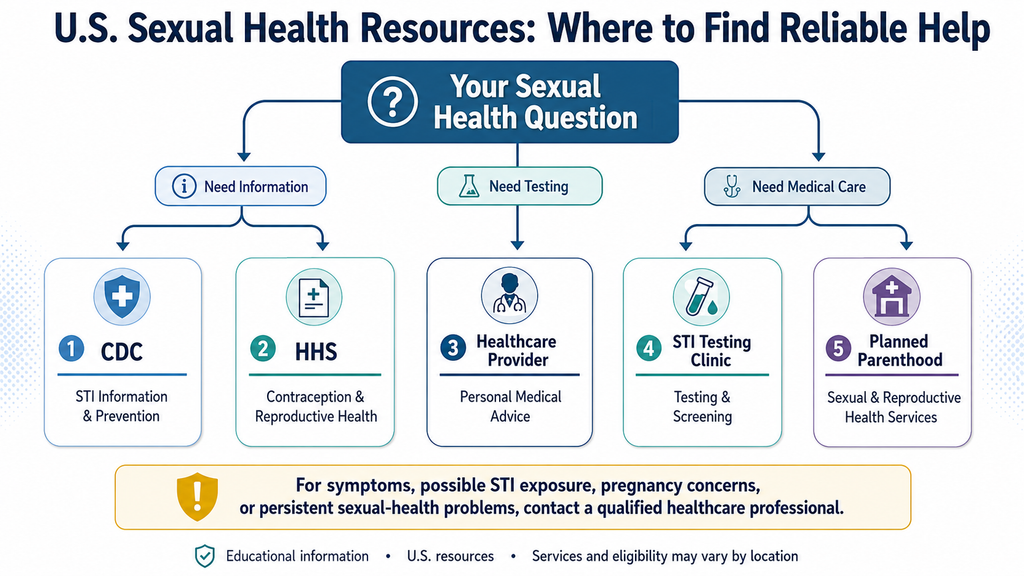
Reliable sexual-health information should come from reputable medical professionals and authoritative health organizations rather than unsupported online claims. For example, the CDC provides information about STI prevention and testing, while the HHS Office of Population Affairs provides contraception information.
Moreover, Planned Parenthood provides sexual-health education, STI testing and treatment, birth-control services, and health-center information, with availability varying by location.
Useful starting points include:
- CDC STI prevention information
- CDC STI testing information
- HHS contraception information
- Planned Parenthood sexual-health resources
- Planned Parenthood health-center finder
What Questions Can You Ask a Healthcare Professional?
Asking direct questions can help you receive more appropriate sexual-health care. For example, you can ask:
- “Which STI tests are appropriate for me?”
- “How often should I be tested?”
- “Which birth-control options fit my needs?”
- “What should I do after a possible STI exposure?”
- “Are these symptoms something I should have checked?”
- “Which vaccines are recommended for me?”
How Can You Apply a USA Sex Guide in Real Life?
A practical sexual-health plan connects information with specific actions such as discussing consent, choosing protection, considering testing, and seeking healthcare when needed. For example, before becoming sexually active with a new partner, you can discuss boundaries, condoms, STI testing, and pregnancy prevention.
A Simple Personal Sexual-Health Checklist
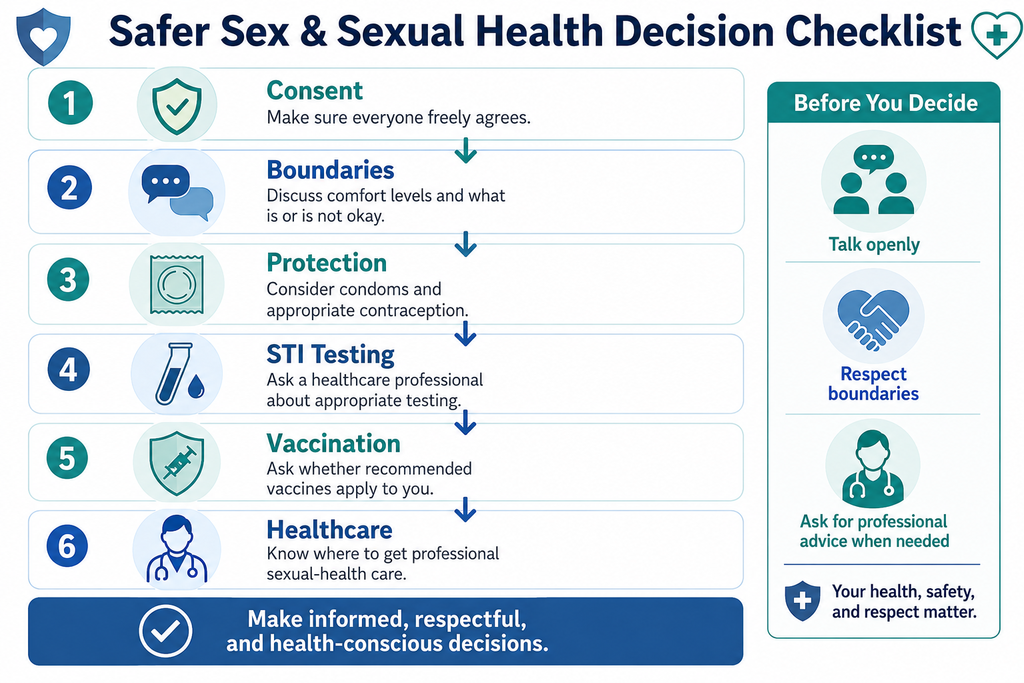
A sexual-health checklist helps you turn general knowledge into practical decisions. Use these steps:
- Discuss consent: Make sure both people freely agree.
- Discuss boundaries: Talk about what each person is comfortable with.
- Plan protection: Consider condoms and appropriate contraception.
- Consider testing: Ask a healthcare professional about relevant STI screening.
- Check vaccinations: Ask whether recommended vaccines, such as HPV or hepatitis B vaccination, apply to you.
- Know where to get care: Identify a local clinic, healthcare provider, or testing service.
- Seek help when needed: Do not ignore concerning symptoms or possible exposure.
Additionally, you can connect these steps with your own wellness guide for a wider approach to physical and emotional well-being.
What’s Next: How Can You Build a Personal Sexual-Health Plan?
Building a personal sexual-health plan means deciding how you will approach consent, protection, testing, contraception, communication, and healthcare. For example, you might decide to keep condoms available, discuss STI testing with a new partner, and schedule recommended healthcare appointments.
First, learn the basics of consent and healthy communication. Second, choose protection that fits your circumstances. Third, learn when STI testing may be appropriate. Finally, speak with a qualified healthcare professional about personal medical questions.
Furthermore, sexual health is an ongoing part of overall health rather than a one-time decision. Your needs may change with relationships, pregnancy plans, age, health circumstances, or new information.
Explore Prostate Wellness If you’re looking for a prostate-focused wellness product, you can explore ProstaVive – Powerhouse Prostate. This type of product should not replace professional medical advice or treatment.

Conclusion
A USA sex guide is ultimately about making informed, respectful, and health-conscious decisions about sexual relationships. Consent, communication, safer-sex practices, STI testing, contraception, and professional healthcare all contribute to responsible sexual health.
Moreover, safer sex is not about achieving zero risk; it is about understanding risks and taking practical steps to reduce them. Reliable information gives you a stronger foundation for communicating with partners and healthcare professionals.
Finally, use authoritative resources when questions involve symptoms, possible infections, contraception, pregnancy, or other medical concerns. By combining accurate information with consent, communication, protection, and appropriate healthcare, you can make more informed decisions about your sexual health.
Written by myserioi.com Editorial Team — Health and Wellness Content Writers
Reviewed by Qualified Healthcare Professional — Sexual and Reproductive Health Review
Disclaimer: This article was initially drafted using AI assistance. However, the content has undergone thorough revisions, editing, and fact-checking by human editors and subject matter experts to ensure accuracy. This article provides general educational information and is not a substitute for individualized medical advice, diagnosis, or treatment.
Affiliate Disclosure
This article may contain affiliate links. If you purchase a product or service through one of these links, we may earn a commission at no additional cost to you.
We only recommend products or services that may be relevant to our readers. However, you should review the product information, ingredients, benefits, risks, and suitability before making any purchase.
This content is for informational and educational purposes only and is not a substitute for professional medical advice.